













· By Daylon Gardner
What is Aged White Cheddar Cheese?
Key Takeaways
-
Aged white cheddar cheese is a Wisconsin favorite known for its sharp, nutty, and tangy flavor that develops over years of careful aging in temperature-controlled rooms.
-
“White” cheddar simply means no annatto coloring was added, while “aged” refers to maturation times ranging from 1 year to 10+ years. Gardner’s specializes in Wisconsin-made cheese across this spectrum.
-
As cheddar ages, it transforms from smooth and sliceable to crumbly with crunchy calcium lactate crystals, concentrating flavor and creating that signature bold bite.
-
Wisconsin’s traditional cheesemaking heritage, high-quality milk from family dairy farms, and expert aging techniques make it a benchmark for aged white cheddar production nationwide.
-
This guide covers practical serving tips, pairing ideas, cooking recommendations, and storage advice to help you enjoy Gardner’s blocks, slices, and snack sticks at home.

So, What Really is Aged White Cheddar Cheese Anyway?
If you’ve ever wondered what makes aged white cheddar cheese so irresistible, you’re in for a treat. At its heart, this is a natural cow’s milk cheese made without annatto coloring and matured for months or even years to develop incredible depth of flavor.
The “white” part is simpler than you might think. Cheesemakers just skip the annatto dye that gives orange cheddar its color, letting the milk’s natural ivory or pale straw hue shine through. What you see is pure, unadulterated cheese; nothing more, nothing less.
When we say “aged,” we’re talking about cheddar that’s been carefully matured for at least 6 to 12 months, though the real magic happens at longer milestones:
| Age Range | Common Names | Flavor Character |
| 1-2 years | Sharp | Clean tang, smooth texture |
| 3-5 years | Extra Sharp | Nutty, savory, firmer bite |
| 8-10+ years | Super Aged | Intense, complex, crystalline |
Compared to mild or young cheddar, aged cheddar has a more pronounced sharpness, nuttiness, and complexity that cheese lovers truly appreciate. Gardner’s focuses on naturally aged white cheddar blocks, slices, and snack sticks, drawing on Wisconsin’s rich cheesemaking tradition to deliver that authentic, time-honored flavor.

How Aging Changes Flavor and Texture
Here’s where the real transformation happens. Time, temperature, and expert care in the aging room work together to turn a mild, firm cheese into a bold, crumbly aged cheddar that practically bursts with character.
During aging, cheese culture and enzymes break down proteins and fats, creating new flavor compounds. Moisture slowly leaves the wheel, concentrating everything that makes cheddar delicious. The longer it ages, the more dramatic the changes.
1-2 Year Cheddar: This is your everyday hero. Still sliceable and smooth with a clean, tangy bite that works beautifully for sandwiches and snacking. It melts like a dream, making it perfect for grilled cheese and quesadillas.
3-5 Year Cheddar: Things get more interesting here. The flavor turns sharper, more savory and nutty, while the texture becomes slightly drier and firmer. This age is fantastic for grating into sauces, building a hearty grilled cheese, or adding character to baked dishes.
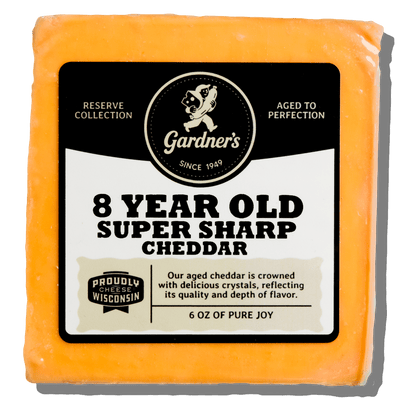
8-10+ Year Cheddar: This is the crown jewel. Expect intense, complex flavors with a crumbly texture and tiny calcium lactate crystals that give a pleasant crunch. These flavor crystals are a sign of a truly well-aged cheese, and they’re absolutely delightful.
Because moisture leaves the cheese as it ages, long-aged cheddar is often sold in smaller pieces. That concentrated flavor means a little goes a long way, and every rich bite is worth savoring.

Why Wisconsin Is Famous for Aged White Cheddar
Wisconsin didn’t become “America’s Dairyland” by accident. The state leads U.S. cheddar production and has been crafting this beloved cheese since European immigrants arrived in the mid-1800s, bringing their cheesemaking traditions with them.
Today, Wisconsin produces roughly 25-30% of the nation’s cheese, that’s over 3 billion pounds annually. Towns like Kiel, Plymouth, and the area around Green Bay have become epicenters for specialty aged white cheddar, produced by small businesses and larger operations alike.
What makes Wisconsin cheddar so special? A few key factors:
-
High-quality Midwest milk from family dairy farms, with the freshness and consistency that great cheese demands
-
Licensed Wisconsin cheesemakers who are trained, tested, and skilled at long-term aging and quality control
-
Ideal climate with cool temperatures perfect for aging caves and storage rooms
-
Deep-rooted tradition passed down through generations of dedicated cheesemakers
Gardner’s pulls from this Wisconsin heritage, using traditional cheddar methods; including the authentic cheddaring process where curds are stacked and turned to develop that signature texture, and carefully controlled aging rooms to develop rich, sharp flavors. When you taste Wisconsin cheese, you’re tasting decades of expertise and care.

Flavor Profiles by Age: From Mildly Sharp to Extra Bold
Choosing the right age of cheddar depends on your taste preferences and what you’re making. Here’s a practical guide to help you pick the perfect match:
1-2 Year Aged White Cheddar (Sharp)
-
Bright tang with a creamy body
-
Versatile for sandwiches, burgers, and quesadillas
-
Great for kids and those new to sharper cheeses
-
Melts smoothly for everyday cooking
3-5 Year Aged White Cheddar (Extra Sharp)
-
Deeper nuttiness with more saltiness
-
Firmer, slightly crumbly bite
-
Ideal for charcuterie boards and bold mac and cheese
-
Adds serious character to cheese sauces
8-10+ Year Aged White Cheddar (Super Aged)
-
Intense tang with toasty, sometimes caramel-like notes
-
Crunchy crystals throughout
-
Best savored in small bites with wine, beer, or fruit
-
A true connoisseur’s delight
Want to really experience how flavor builds over time? Try a “taste by age” approach, serve two or three different ages side-by-side on a board. It’s a fun way to share with friends and discover your personal favorite.

Buying, Storing, and Handling Aged White Cheddar
Good news: aged cheddar is remarkably easy to care for at home with just a few simple habits.
Storage Basics:
-
Vacuum-sealed blocks or pieces can keep in the refrigerator for many months, often close to a year if kept cold and sealed
-
Store cheese in the main part of the fridge (not the door) at a steady temperature
-
Keep it wrapped in its original packaging, or rewrap in parchment paper inside a loose plastic bag
Freezing: While freezing is possible, it can affect texture. If you must freeze, plan to use thawed cheese for cooking rather than snacking, the texture works fine when melted into dishes.
Handling Tips:
-
Cut off any small surface mold on natural cheese (totally normal and safe)
-
Bring cheese to room temperature for 20-30 minutes before serving to let flavors fully develop
-
Rewrap tightly after each use to prevent drying
Aged cheddar is forgiving and shelf-stable compared to many cheeses, so you can stock up without worry. Many products are shipped directly and arrive ready to enjoy or store.
FAQ
Is aged white cheddar stronger than yellow cheddar?
The color difference between white and yellow cheddar comes from annatto coloring, not flavor strength. White cheddar simply skips the dye, while yellow cheddar has it added. If you compare a 5-year white cheddar to a 5-year yellow cheddar made the same way, they’ll have very similar sharpness. Aged white cheddar often seems stronger because it tends to be matured longer, which is where that bold taste comes from.
How do I know which age of cheddar to buy if I’m new to aged cheese?
Start with a 1-2 year aged cheddar for a firm but familiar sharpness that’s easy to enjoy on sandwiches and crackers. Once you love that, move to a 3-5 year cheddar for more complexity and nuttiness. For 8-10+ year super-aged cheddar, try small pieces on a cheese board first, paired with something sweet like honey or jam to balance the intensity. It’s a delicious way to work your way up.
Can people who are lactose sensitive enjoy aged white cheddar?
Great news here: most of the lactose in cheddar is consumed by cheese culture early in the cheesemaking process. Long-aged cheddars are naturally very low in lactose, which is why many lactose-sensitive people tolerate them better than fresh dairy products. That said, everyone’s different, consult your doctor or dietitian and introduce aged cheddar slowly if you’re unsure.
What’s the best way to slice or crumble very old cheddar without it falling apart?
For neat slices from super-aged cheddar, use a sharp, thin knife or wire cheese cutter while the cheese is still cold from the fridge. If you want rustic chunks for a cheese board, let it warm slightly, then use a cheese plane or simply break it apart by hand. Those natural crumbles and crunchy crystals in 8-10+ year cheddar are part of its charm, embrace them for boards and salads.
How far in advance can I set out aged cheddar for a party?
Remove blocks or slices from the refrigerator 20-40 minutes before serving to let the flavor and aroma fully develop. You can safely leave cheese out for up to 2 hours at normal room temperature, then refrigerate any leftovers promptly. Pre-cut some pieces shortly before guests arrive, but leave part of the block whole for visual appeal and to keep it fresh longer.
