













· By Daylon Gardner
What Is Gouda Cheese? A Flavor, History & Pairing Guide from Wisconsin
Gouda is one of those cheeses almost everyone has eaten but few have thought much about. It's on grilled cheese sandwiches, in mac & cheese, on cheese boards, and melted over burgers. But what IS gouda, really?

Here's the 101 on gouda. Where it comes from, what it tastes like, how to pronounce it without embarrassing yourself, and why the aged varieties are a whole different beast.
Cheesy Takeaways
-
Gouda is a Dutch semi-hard cheese originally from the town of Gouda in the Netherlands.
-
Young gouda is mild, creamy, and slightly sweet. Aged gouda is nutty, caramel-like, and complex.
-
Gouda melts beautifully, which makes it a star in mac & cheese, grilled cheese, and sauces.
-
It's pronounced "GOO-duh" in the US ("HOW-duh" in the Netherlands if you want to be authentic).
-
Aged gouda is naturally low in lactose, making it friendly for sensitive stomachs.
Where Does Gouda Cheese Come From?
Gouda takes its name from the Dutch city of Gouda, where cheesemakers have been trading it since the 12th century. The city's open market was one of Europe's biggest cheese trading hubs, and any cheese that passed through took the name with it.
Fun fact: the name "gouda" isn't protected in most of the world, which means any cheese made in the gouda style can legally be called gouda. Wisconsin cheesemakers, with our long Dutch & Northern European heritage, have been making excellent gouda for well over a century.
Real Dutch gouda & Wisconsin-made gouda are both legitimate. Our Aged Gouda is made right here in central Wisconsin by a fourth-generation Wisconsin cheesemaker.

How Is Gouda Made?
Gouda is a washed-curd cheese, which is the technical detail that matters. Here's the simplified process:
-
Heat & culture the milk. Cow's milk is heated & bacterial cultures are added to start fermentation.
-
Add rennet to curdle the milk. The milk separates into curds (solids) & whey (liquid).
-
Cut the curds. Into small pieces that release more whey.
-
Wash the curds. This is the distinguishing step. Some whey is drained & replaced with warm water, which washes away lactose & gives gouda its characteristic mild, sweet flavor.
-
Press into molds. The curds are pressed into round or wheel shapes.
-
Brine bath. Soaked in salt water to draw out moisture & add flavor.
-
Age. From weeks (young gouda) to years (aged gouda).

The washing step is why gouda tastes different from cheddar. Less residual lactose & whey means less tang, more of that sweet-nutty character.
What Does Gouda Cheese Taste Like?
Gouda's flavor is a moving target that depends entirely on age.
Young Gouda (4-8 weeks)
Mild, creamy, slightly sweet. A little salty. Think of it as the friendly, approachable everyday gouda. Melts well, slices for sandwiches, good for kids. The gouda most people encounter at the grocery deli counter.

Medium-Aged Gouda (3-6 months)
Firmer, richer, more complex. Starts to develop nutty notes while keeping some of the soft creaminess. Good middle ground for people who want more flavor than young gouda but not the intensity of aged.
Aged Gouda (12+ months)
This is where gouda goes from nice to wow. Deep caramel & butterscotch notes develop. Texture firms up into something crumbly & dense. Tyrosine crystals (those pleasant little crunches) appear throughout the cheese. Umami depth intensifies.
Our Aged Gouda hits this stage beautifully. Nutty, slightly sweet, with the kind of complex flavor that rewards slow eating.
Extra-Aged Gouda (2+ years)
Dry, crumbly, intensely flavored. Almost butterscotch-meets-toffee with savory undertones. Often eaten on its own like a fancy snack rather than melted or used in cooking.
How Do You Pronounce Gouda?
In the Netherlands: "HOW-duh" with a guttural G that most English speakers can't replicate. In the US: "GOO-duh." Both are accepted. Nobody who actually knows cheese will judge you for saying it either way. Just order the cheese & enjoy.
Does Gouda Cheese Melt?
Beautifully. Gouda has the right moisture & fat structure to melt smoothly & evenly without separating. This makes it a standout in:
-
Mac & cheese (try our Bacon & Gouda Mac & Cheese recipe)
-
Grilled cheese sandwiches
-
Cheese sauces & fondues
-
Pizza toppings
-
Melted over burgers
-
Baked into casseroles
Aged gouda melts well too, though the firmer texture means it takes slightly longer. Shred it finer for faster melting.

How to Serve Gouda
Quick rules depending on what you've got:
-
Young gouda: Slice for sandwiches, melt for cooking, cube for kids' snacks.
-
Medium gouda: Cube for a cheese board, pair with fruit, add to a grilled cheese.
-
Aged gouda: Break into shards for a cheese board, pair with sweet drizzles & cured meats, or shred for gourmet mac & cheese.
-
Everything: Pull from fridge 30-45 minutes before serving so it comes to room temperature. Cold gouda tastes muted.
Best Pairings for Gouda
Gouda plays nicely with almost everything, which is part of why it's so popular. Our recommendations:
-
Sweet pairings: Apples, pears, figs, dried apricots. Our Wild Berry Drizzle & Hot Honey Drizzle complement gouda's caramel notes beautifully.

-
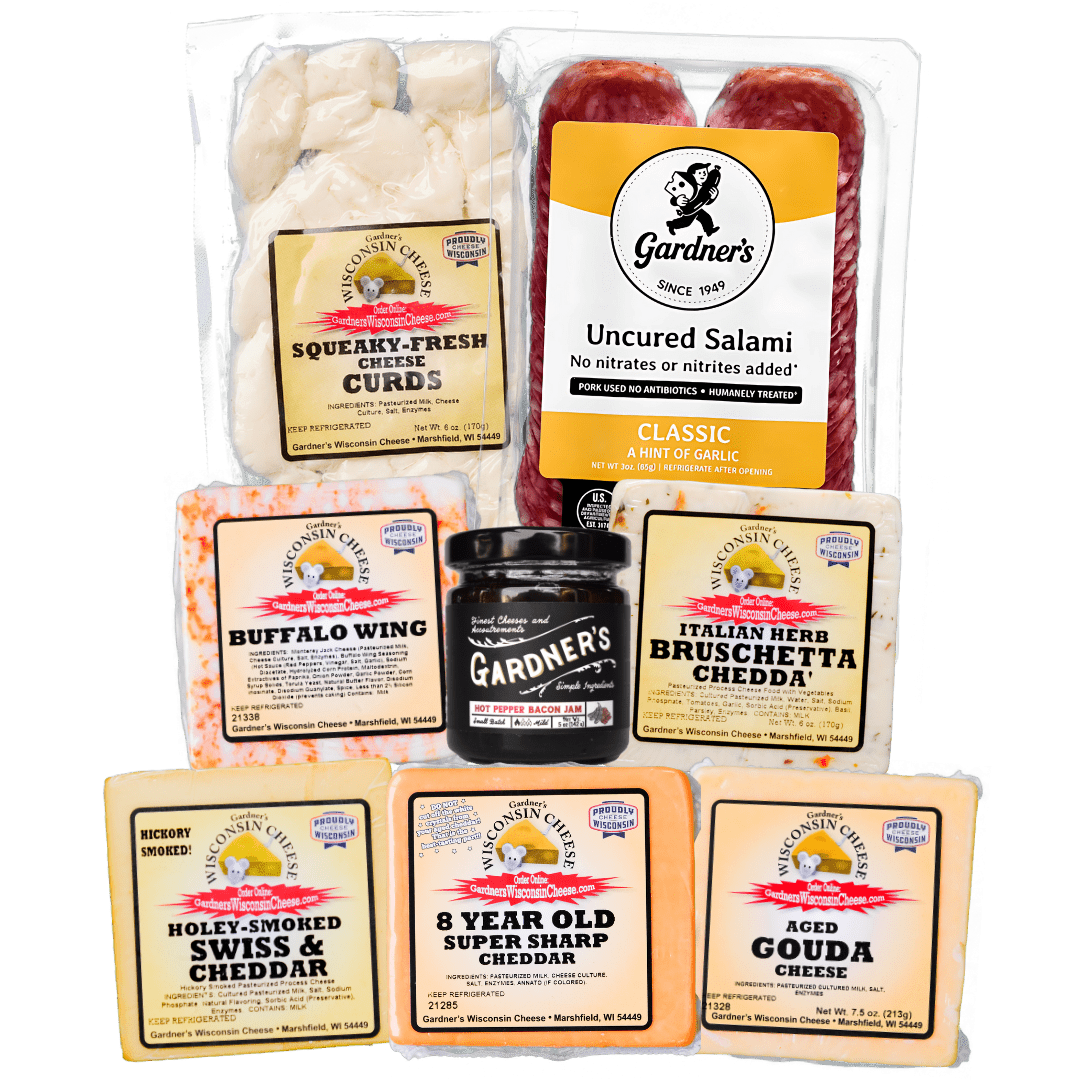
Savory pairings: Garlic Summer Sausage, prosciutto, smoked meats, and our Hot Pepper Bacon Jam.

-
Drinks: Sauvignon Blanc, IPA, lager, port wine (for aged gouda especially).
-
Nuts: Walnuts, almonds, marcona almonds.
-
Bread & crackers: Sturdy crackers, dark breads, good baguette.
Is Gouda Healthy?
Like most cheese, gouda is high in protein, calcium, and vitamin K2, with almost no carbs. It's naturally gluten-free & keto-friendly. Aged gouda is especially low in lactose (often less than 0.1g per serving), making it a good choice for lactose-sensitive eaters. For more details, check our guide to low-lactose cheeses.
It's still cheese, so portion smart. A 1 oz serving delivers plenty of flavor & nutrition.
The Gardner's Take
We've been making Wisconsin cheese for four generations, and our Aged Gouda is one of our proudest products. Nutty, slightly sweet, versatile, and aged long enough to develop those crystalline crunches & complex flavor notes that set real aged gouda apart.
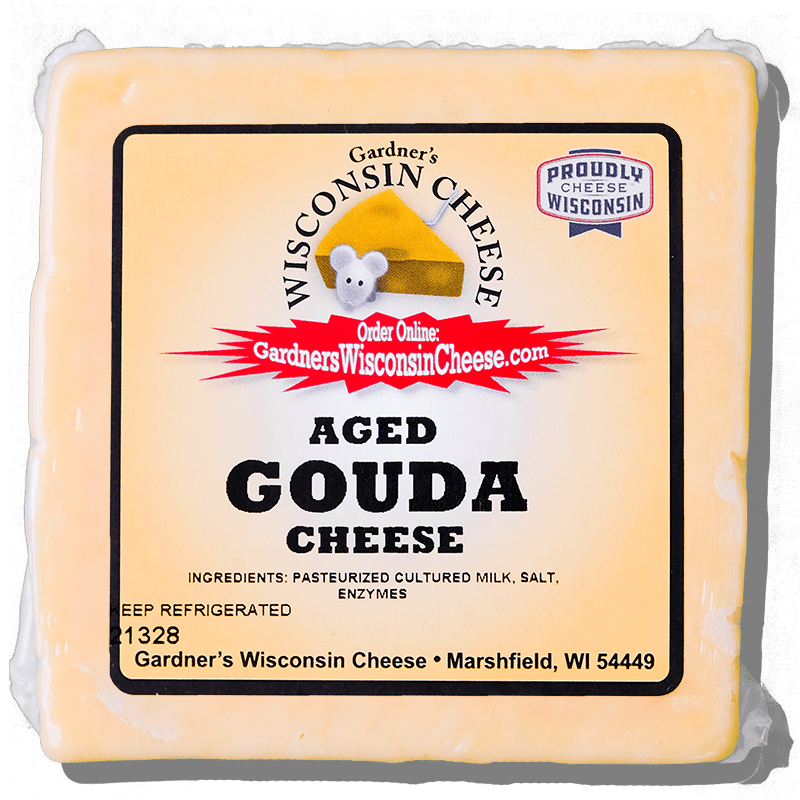
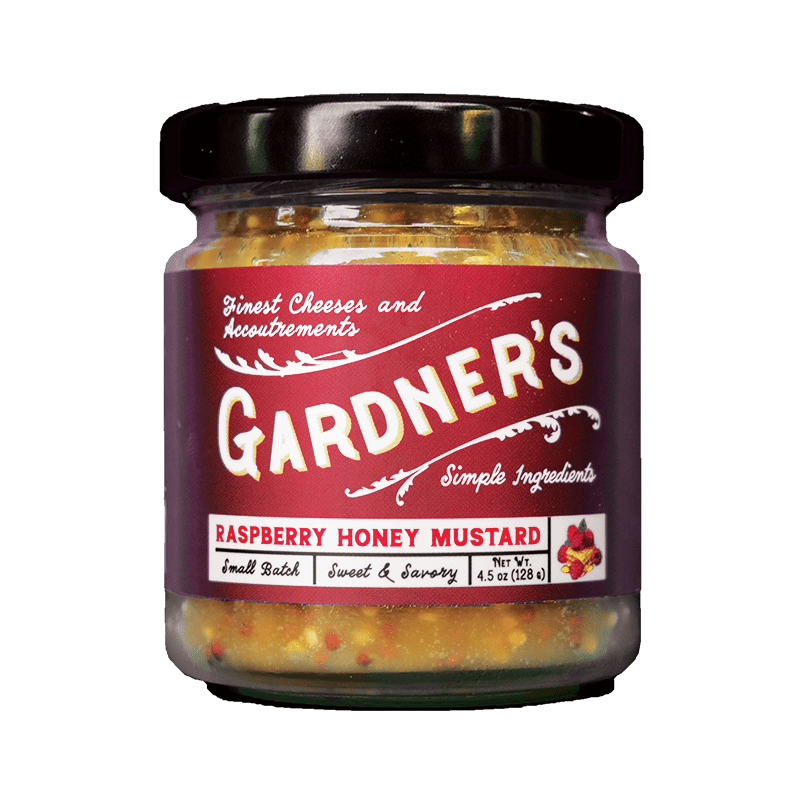
If you want to experience gouda in a way that changes your opinion of it, skip the grocery deli & order an aged block. Pair it with Raspberry Honey Mustard and an IPA, and you'll see what gouda is really capable of.
For the broader aged cheese story, check our top aged cheeses guide. For a deeper dive into aged gouda specifically, see our aged gouda flavor & pairings guide.
FAQ: Gouda Cheese
What does gouda cheese taste like?
Young gouda is mild, creamy, and slightly sweet. Aged gouda is nutty, caramel-flavored, firmer, and often has pleasant crystal crunches. The longer the aging, the more complex the flavor.
Where is gouda cheese from?
Originally from the Dutch town of Gouda in the Netherlands. Today gouda is made worldwide, including right here in Wisconsin.
How do you pronounce gouda?
"GOO-duh" in the US. "HOW-duh" in the Netherlands. Both are accepted.
Does gouda melt?
Yes, beautifully. Young gouda melts smoothly into sauces & sandwiches. Aged gouda melts too, just a bit slower.
Is gouda cheese healthy?
Gouda is high in protein, calcium, and vitamin K2, with almost no carbs. Aged gouda is naturally low in lactose. Enjoy in reasonable portions.
What is gouda cheese made from?
Traditionally cow's milk, with bacterial cultures, rennet, and salt. Wisconsin cheesemakers use high-quality local dairy from nearby farms.
Is there a difference between gouda & aged gouda?
Big difference. Young gouda is soft, mild, and creamy (aged weeks). Aged gouda spends months or years developing firmer texture, nutty-caramel flavor, and lower lactose content.
Bottom Line
Gouda is a gateway cheese & a destination cheese. Young gouda is easygoing & melts like a dream. Aged gouda is one of the most rewarding cheeses you can put on a board.
Try our Aged Gouda if you haven't yet. Pair it with Hot Honey Drizzle and prepare to understand why gouda deserves more than its grocery-deli reputation.
