








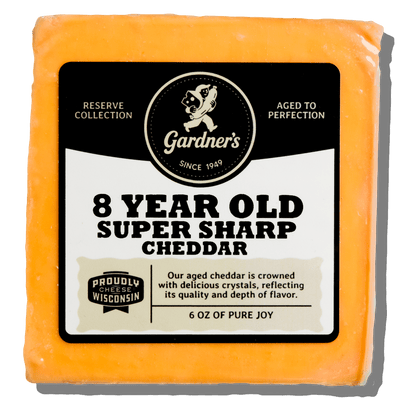






· By Daylon Gardner
What is Sharp Cheddar Cheese?
Key Takeaways
-
Aging intensifies flavor through enzyme activity that breaks down proteins and fats, creating sharper, nuttier, more complex tastes. This often results in crunchy crystals and a firmer, crumbly texture.
-
Sharp cheddar differs from mild in practical ways: it delivers bolder flavor but can be slightly trickier when melting, making it ideal for dishes where you want cheese to be the star.
-
While sharp cheddar is produced worldwide, Wisconsin cheddar, Vermont cheddar, and traditional English regions remain especially known for bold, characterful wheels and blocks.
-
Store sharp cheddar wrapped in parchment in the fridge, serve it at room temperature for best flavor, and pair it with robust foods like cured meats, crackers, and bold beverages.
If you’ve ever stood in front of the cheese case wondering what makes one cheddar “sharp” and another “mild,” you’re in good company. Sharp cheddar cheese isn’t just a marketing term, it represents a specific stage of maturity where flavor, texture, and character reach their peak. Ready to become a sharp cheddar expert? Let’s dig in!

What Makes Cheddar “Sharp”?
Here’s the deal: sharpness in cheddar has nothing to do with spiciness. It’s all about the intensity of flavor developed during aging. The longer a cheddar sits in carefully controlled conditions, the more pronounced its taste becomes.
The typical aging ranges break down like this:
|
Style |
Aging Time |
Flavor Profile |
|
Mild |
2–3 months |
Creamy, gentle, buttery |
|
Medium |
4–6 months |
Slightly tangy, more depth |
|
Sharp |
9–12 months |
Bold, tangy, nutty |
|
Extra Sharp |
18–24+ months |
Intense, complex, crystalline |
|
Vintage |
5–17+ years |
Extremely concentrated, crumbly |
During aging, enzymes from starter cultures and residual rennet break down proteins and fats in the cheese. This proteolysis produces free amino acids and fatty acids that create those tangy, nutty, and umami notes we love in aged cheddar.
After about 6–12 months, you’ll often notice small, crunchy calcium lactate crystals forming in the cheese. These aren’t defects, they’re prized signs of proper aging and indicate a well-developed sharpness.
One thing worth noting: terms like “sharp,” “extra sharp,” or “vintage” aren’t legally standardized across all brands. Sharpness can vary significantly from one producer to another, so the best approach is to look for specific age statements on labels whenever possible.

Flavor, Aroma, and Texture of Sharp Cheddar
Picture this: you unwrap a wedge of properly aged sharp cheddar and immediately catch its clean, savory aroma. The first bite delivers a bold, tangy punch that evolves into earthy, complex layers on your palate. This is cheese with character, cheese that makes you sit up and pay attention.
The key flavor notes you’ll typically encounter include:
-
Lactic tang with a pleasant acidic brightness
-
Toasted or roasted nutty flavor reminiscent of hazelnuts or almonds
-
Browned butter richness
-
Light caramel sweetness
-
Occasional hints of fruit or citrus
The aroma should be clean dairy with subtle grassiness and a sharp, savory edge. If a sharp cheddar smells sour, ammonia-like, or off-putting, that’s a sign something has gone wrong, fresh sharpness is wonderful, not harsh.
Texture-wise, expect firm to crumbly consistency. Sharp cheddar is drier than its mild counterpart, and those crunchy crystals add a bite that many cheese lovers find addictive. Compare this to mild cheddar, which tends to be smooth, pliable, and creamy when sliced. Mild melts into silky pools; sharp holds more structure and can be slightly more brittle when cut into thin pieces.

How Sharp Cheddar Is Made
All cheddar cheese follows a similar basic production process, but it’s the aging and careful handling that transform a young wheel into something distinctly sharp.
The journey begins with pasteurized (or sometimes raw) cow milk. Cheesemakers add starter cultures that convert lactose into lactic acid, then introduce rennet to coagulate the milk into curds. These curds are cut into small pieces, typically 6–10mm cubes, and gently heated while stirring to expel whey.

The defining step is cheddaring itself. After draining, the curds are formed into blocks and stacked on top of each other. Every 10–20 minutes, cheesemakers flip and restack these slabs for 1–2 hours. This process uses the weight of the curds to press out additional moisture while developing the smooth, dense texture that defines great cheddar.
After cheddaring, the matted curds are milled into smaller pieces and salted at roughly 2–3% of the curd weight. Salt adds flavor, controls moisture, and acts as a natural preservative. The salted curds are then pressed into blocks or wheels and moved to aging rooms where temperature and humidity are tightly controlled.
From there, time works its magic. A block aged 12 months tastes dramatically different from one aged 3 months, and by 18–24 months, you’re entering extra sharp territory where flavors concentrate even further.
Styles and Regions of Sharp Cheddar
Sharp cheddar is now produced across the world, but certain regions have developed distinctive styles that cheese lovers seek out.
Traditional English-Style Cheddars
The original cheddar hails from Somerset and surrounding counties in the UK. Traditional English clothbound wheels are wrapped in muslin and aged in natural caves or controlled cellars. Expect earthy, nutty complexity with a firm, sometimes crumbly texture. These wheels often show wonderful flavor development from their specific origin and local milk sources.
American Sharp Cheddar Styles
In the United States, Wisconsin cheese production dominates, the state produces over 50% of America’s cheddar. Wisconsin cheddar tends to be block-aged, delivering a clean, bright tang with excellent melting properties. Vermont cheddar is another beloved style, often featuring a slightly more rustic character and robust flavor. New York state also produces noteworthy sharp varieties.
White vs. Orange Cheddar
The yellow or orange color in many cheddars comes from annatto, a natural plant-based colorant. It provides color only and does not significantly change the flavor. White cheddar simply skips this addition. Either way, taste differences come from milk source, cultures, and aging, not color.
Specialty Sharp Cheddars
-
Extra-aged blocks (10–17 years): Incredibly intense sharpness with pronounced crystals and a hard, rich texture
-
Smoked varieties: Wood-smoke adds a savory layer that complements the natural tang

Buying and Storing Sharp Cheddar
When shopping, look for clear aging information on labels. Terms like “aged 12 months” or “18-month cheddar” give you real answers about what to expect. Marketing words alone don’t tell the full story.
Buy wedges or blocks rather than pre-shredded products whenever possible. Pre-shredded cheese often contains anti-caking agents that can affect melting and flavor. A natural block you cut yourself delivers better quality and fresher taste.
Storage Guidelines
Wrap your sharp cheddar in cheese paper or parchment paper, then add a loose layer of plastic wrap or a reusable silicone bag. Store it in the refrigerator’s cheese drawer or vegetable crisper, where temperatures stay relatively stable. For more information on the best way to store cheese, read our comprehensive guide.

Your sharp cheddar adventure awaits! Whether you’re building the ultimate cheese board, hunting for the perfect melting cheddar for your kitchen creations, or simply looking to enjoy a few slices with crackers and a cold drink, understanding what makes cheddar sharp helps you choose wisely. Go grab a wedge, let it warm to room temperature, and taste the wonderful difference that time and craftsmanship create. Happy tasting, cheese champions!
FAQ
How old does cheddar have to be to be considered “sharp”?
Most cheesemakers call cheddar sharp once it reaches roughly 9–12 months of aging. Extra sharp typically starts around 18 months, and specialty cheddars can age anywhere from 5 to 17+ years for truly intense flavor. Keep in mind that exact age thresholds vary by producer, so one brand’s “sharp” might taste different from another’s.
Is sharp cheddar healthier than mild cheddar?
Sharp and mild cheddar have very similar nutritional profiles. Both provide good amounts of protein, calcium, and fat. The primary difference is moisture content, sharp cheddar loses more moisture during aging, concentrating nutrients slightly. Because sharp cheddar tastes more intense, many people eat smaller portions naturally, which can reduce calories and sodium per serving.
Why does some sharp cheddar have crunchy bits in it?
Those crunchy bits are calcium lactate crystals that form as cheese ages and loses moisture. They’re completely safe to eat and are often prized by cheddar enthusiasts as a sign of well-aged cheese. If your cheddar has crystals, it’s a good indicator of extended aging and pronounced sharpness, possibly something impossible to find in younger cheeses.
Can people who are lactose intolerant eat sharp cheddar?
Most of the lactose in cheddar drains away with the whey during production, and the remaining lactose continues breaking down throughout aging. By the time cheddar reaches sharp or extra sharp maturity, lactose levels are very low. Many lactose-intolerant individuals tolerate small portion sizes of aged cheddar well, though checking with a healthcare professional is always a happy idea if you’re unsure.
Does orange sharp cheddar taste different from white sharp cheddar?
The orange color typically comes from annatto, a natural plant-based ingredient added for visual appeal. It doesn’t significantly change taste or sharpness. Any flavor differences between white and orange sharp cheddars result from factors like milk source, specific cultures used, and aging conditions, not the color itself.