












· By Daylon Gardner
Cheeses Low in Lactose: A List Worth Memorizing (And Then Eating)
Key Takeaways
-
Most naturally aged cheeses are very low in lactose, and several aged cheddars are completely lactose free, making them safe and delicious for people with lactose sensitivity.
-
The key factors that determine how much lactose a cheese contains are aging time and moisture content: longer aging and lower moisture both mean less lactose.
-
Gardner's aged cheddar lineup, including their 8, 13, and 17-year super-sharp cheddars, aged parmesan, and aged gouda, are some of the best low lactose cheese options available anywhere.
-
This guide covers which cheeses are lowest in lactose, which ones sit in the middle, and which ones to approach carefully so you can shop and snack with confidence.
-
Wisconsin's depth of long-aged cheese expertise makes it the most reliable source of genuinely low lactose options in the country.
The List You Wish You Had Sooner
If you have spent any amount of time managing lactose sensitivity and also loving cheese, you have probably done a version of the following: stared at a cheese board, mentally tried to calculate which options were safe, made a guess, and then spent the rest of the evening finding out if you were right.
This blog exists so you never have to do that again.
What follows is a straightforward, honest breakdown of which cheeses are lowest in lactose, which ones are in the middle, and which ones are worth approaching carefully. We will also tell you exactly which Gardner's products belong in your low lactose rotation so you can shop with zero guesswork.

The short version: aged cheese is your friend. The longer the aging, the lower the lactose. Wisconsin has been aging cheese longer and more seriously than anywhere else in the country for over 150 years. These two facts combine to produce very good news for your cheese board and your stomach.
Why Lactose Content Varies So Much Between Cheeses
Before the list, a quick explanation of why this varies so dramatically from one cheese to another.
Lactose is the natural sugar found in milk. When cheese is made, starter bacteria immediately begin consuming lactose and converting it into lactic acid. Whey drains away, taking more lactose with it. By the time fresh curds form, much of the original milk's lactose is already gone.

Aging continues the job. Over months and years, bacterial activity breaks down whatever lactose remains until the content approaches zero. This is why a 17-year-old cheddar and a glass of whole milk have almost nothing in common nutritionally despite both starting from the same ingredient.
Moisture content matters too. Higher moisture cheeses like fresh mozzarella, cottage cheese, and ricotta retain more whey and therefore more lactose. Lower moisture hard cheeses have less lactose almost by definition.
With that framework in mind, here is your list.
The Low Lactose Cheese List
Effectively Lactose Free: Eat Freely and Joyfully
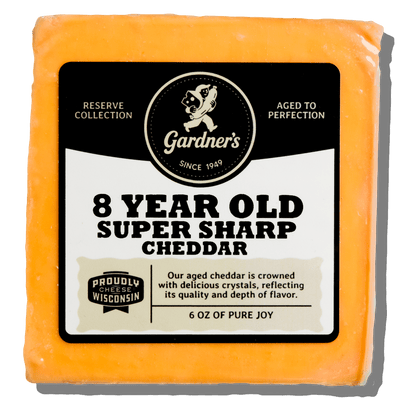
Aged Cheddar (8 years and older) Gardner's 8-Year-Old Super-Sharp Cheddar is smooth, buttery, and punchy with a powerful cheddar flavor that eight years of aging has made genuinely complex. At this age, lactose content is negligible. This is the entry point into the aged cheddar world for sensitive stomachs and it is a very good entry point indeed.
13-Year-Old Super-Sharp Cheddar Gardner's 13-Year-Old Super-Sharp Cheddar is explicitly labeled lactose free on its product page. Thirteen years of aging has produced one of the sharpest, most complex cheddars available anywhere. Those crunchy tyrosine crystals that form during long aging? Completely safe for sensitive stomachs and completely worth seeking out.

17-Year-Old Super-Sharp Cheddar Gardner's 17-Year-Old Super-Sharp Cheddar is also explicitly labeled lactose free. Rare, creamy, intensely sharp, and about as far from a lactose problem as it is possible to get while still being cheese. If you have been telling yourself you cannot eat dairy, this is the cheese that proves you wrong.
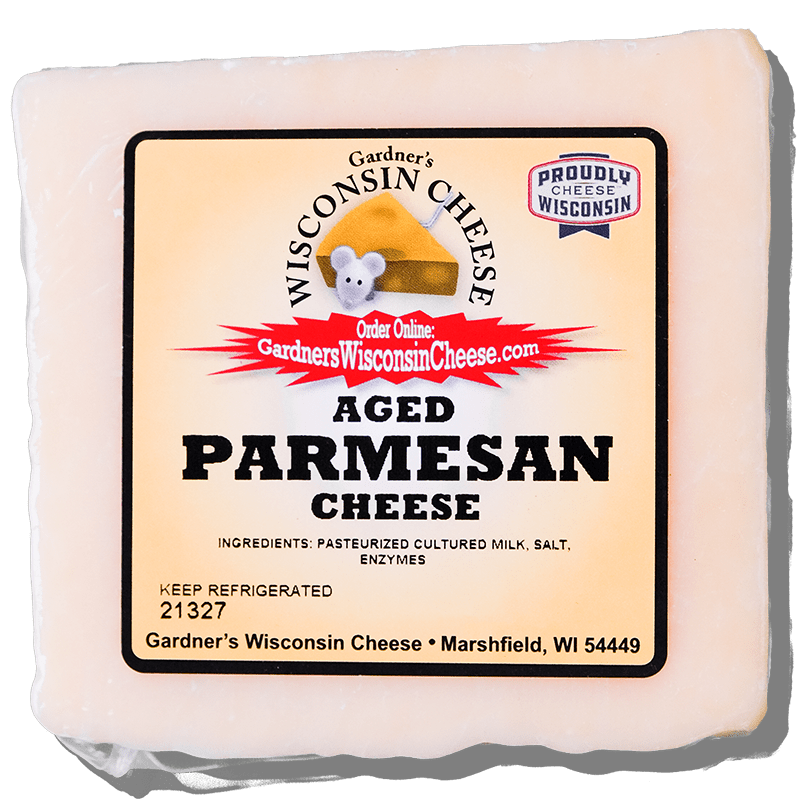
Aged Parmesan Gardner's Aged Parmesan is nutty, fruity, and dense in a way that makes a small amount go a long way. Its long aging period and naturally low moisture content put it firmly in the effectively lactose free category. Grate it over pasta, eat it in thin shards, or just break off a piece and eat it standing at the counter. All valid.

Aged Gouda Gardner's Aged Gouda is nutty and slightly sweet with a versatile flavor that works on cheese boards, melted into dishes, or eaten straight from the block. Aged long enough to bring lactose levels well down while keeping the flavor approachable for a wide range of palates.

Very Low Lactose: Generally Well Tolerated
Standard Sharp Cheddar (aged 6 to 24 months) Not as dramatically low as the multi-year aged versions, but still among the lowest lactose cheese options available. Most people with mild to moderate sensitivity tolerate standard sharp cheddar well in reasonable portions.
Swiss The holes in Swiss cheese are actually produced by bacteria during fermentation, which also happens to consume lactose in the process. Swiss typically tests at very low lactose levels and is widely tolerated by sensitive individuals.
Provolone Another aged, lower moisture cheese with naturally low lactose content. A solid option for building out a cheese board with variety.

Moderate Lactose: Proceed Thoughtfully
Fresh Mozzarella Significantly more lactose than aged hard cheeses due to its fresh, high-moisture nature. Most people with mild sensitivity tolerate it fine in small amounts. Worth being mindful of portion size.
Younger Cheddars (under 3 months) Early in the aging process, cheddar still retains more lactose than its older counterparts. Mild cheddar and other young varieties are better tolerated than fresh dairy but sit noticeably higher than aged versions.
Brie and Camembert Soft-ripened cheeses have more moisture and more lactose than hard aged options. Some people with mild sensitivity tolerate them well, others do not. Individual testing is the only reliable guide here.

Higher Lactose: Handle With Care
Cottage Cheese Fresh, high-moisture, and significantly higher in lactose than any aged cheese. Low fat versions can actually be higher in lactose than full fat because more whey is retained. Approach carefully if sensitivity is significant.
Ricotta Another fresh, high-moisture cheese with relatively high lactose content. Beautiful in cooking but not the friend of a sensitive stomach in large quantities.
Cream Cheese Unaged and higher in moisture than hard cheeses, cream cheese sits on the higher end of the lactose spectrum for dairy products. Low lactose cream cheese products exist but typically require added lactase enzyme rather than achieving low lactose through natural aging.
Building a Low Lactose Cheese Board With Gardner's

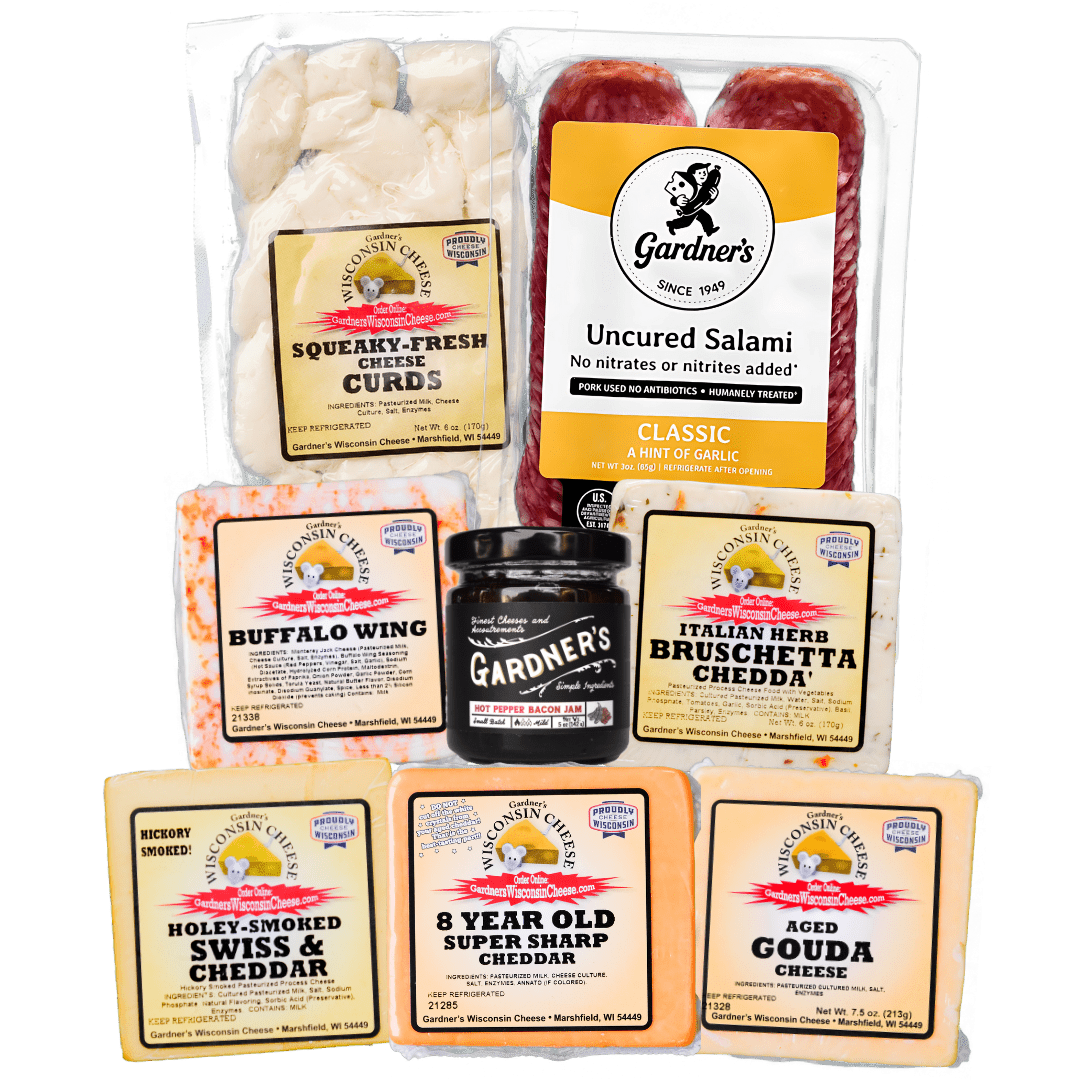
The good news about shopping Gardner's for a low lactose spread is that their strongest and most celebrated products are exactly the ones that work best for sensitive stomachs. Long-aged cheddars, aged parmesan, aged gouda: these are both the most flavorful options and the lowest lactose options. You are not compromising for a health reason. You are just choosing the best cheese.
A simple low lactose board built from the Gardner's lineup might look like this:
Start with the 8-Year-Old Super-Sharp Cheddar as your anchor. Slice it thin and let it come to room temperature before serving. Add a wedge of Aged Parmesan broken into irregular shards for a textural contrast. Include the Aged Gouda for a milder, slightly sweet note that balances the sharpness of the cheddar. Round it out with artisan meats from Gardner's artisan meats collection, some nuts, dried fruit, and good crackers.
That is a genuinely impressive cheese board with effectively zero lactose concern and zero compromise on flavor. Wisconsin delivers again.

For those who want the full aged cheddar experience in one package, the Super Sharp Cheddar Package brings together the 8-year, 13-year, 17-year, and dry-aged cheddars in one discounted bundle. It is also a side-by-side tasting experience that tells the whole story of what additional years of aging do to the same starting ingredient. Spoiler: the answer is always more flavor and less lactose.
A Note on Individual Tolerance
This list is a reliable guide, not a medical prescription. Individual lactose tolerance varies significantly from person to person. Some people with lactose intolerance can eat virtually any aged cheese without issue. Others are more sensitive and need to stick strictly to the oldest, hardest varieties.
Start with the explicitly lactose-free options like Gardner's 13-year and 17-year cheddars. Pay attention to how your body responds. Build your own personal list from there. And when in doubt, lean older and harder. Wisconsin's aged lineup has you covered on both counts.
For a broader look at how cheese fits into health-conscious eating, check out our blog on Is Cheese Good for You? We're Not Gouda Lie to You for the full nutritional picture.
Frequently Asked Questions
What cheeses are low in lactose? The lowest lactose cheeses are long-aged hard varieties: aged cheddar, parmesan, and aged gouda lead the list. Gardner's 13-year and 17-year super-sharp cheddars are explicitly labeled lactose free. As a general rule, the older and harder the cheese, the lower the lactose content.
Is there a low lactose cheese list I can use for grocery shopping? Yes, and it is shorter than you might think. Focus on aged hard cheeses: extra-sharp cheddar, parmesan, aged gouda, aged swiss, and aged provolone. Avoid fresh cheeses like ricotta, cottage cheese, and cream cheese if lactose is a significant concern. Gardner's aged cheddar lineup is an excellent place to order from directly since lactose free status is noted on individual product pages.
What cheeses that are low in lactose also taste the best? This is the question that Wisconsin was born to answer. Gardner's aged cheddars, particularly the 8, 13, and 17-year varieties, are simultaneously some of the lowest lactose cheeses available and some of the most complex and satisfying to eat. Aged parmesan and aged gouda round out a genuinely excellent low lactose lineup that does not ask you to sacrifice flavor for comfort.
Is low fat cottage cheese lower in lactose than regular cottage cheese? Actually no, and this surprises people. Low fat cottage cheese often retains more whey during production than full fat versions, which can mean slightly higher lactose content. For genuinely low lactose options, aged hard cheeses are a significantly more reliable choice than any variety of cottage cheese.
How do I know if a specific cheese is low in lactose without testing it myself? Aging time and moisture content are your two most reliable signals. Hard cheeses aged six months or longer are almost always very low in lactose. Cheeses explicitly labeled lactose free, like Gardner's 13-year and 17-year cheddars, remove all uncertainty. When in doubt, go older and harder and you will rarely be wrong.
