












· By Daylon Gardner
Mold on Cheese: When to Cut It Off, When to Throw It Out
You open the fridge. You reach for the cheese. You see a spot of green fuzz.
The next 30 seconds usually involve some combination of squinting, texting a family member, & Googling “can you eat cheese with mold on it.” This post is going to save you that time. Here is the actual cheesemaker's answer, the hard-vs-soft rule that matters more than anything else, & the photos-worth-a-thousand-words guide to which molds are safe & which mean the cheese goes in the trash.
Key Takeaways
-
Hard, aged cheeses (like cheddar or gouda): cut off 1 inch around & below the mold. Rest is safe.
-
Soft cheeses (like fresh mozzarella, ricotta, cream cheese, cottage cheese): visible mold means throw the whole thing out.
-
Some molds are intentional (blue cheese, brie rinds). Those are supposed to be there.
-
Green, black, gray, or pink mold on unexpected cheeses is a signal to check the hard/soft rule.
-
When in doubt, throw it out. Cheese isn't worth food poisoning.
The Hard-vs-Soft Rule (Answer 90% of Mold Questions)

Almost every mold question about cheese comes down to one simple rule: hard cheeses are safe to trim, soft cheeses are not.
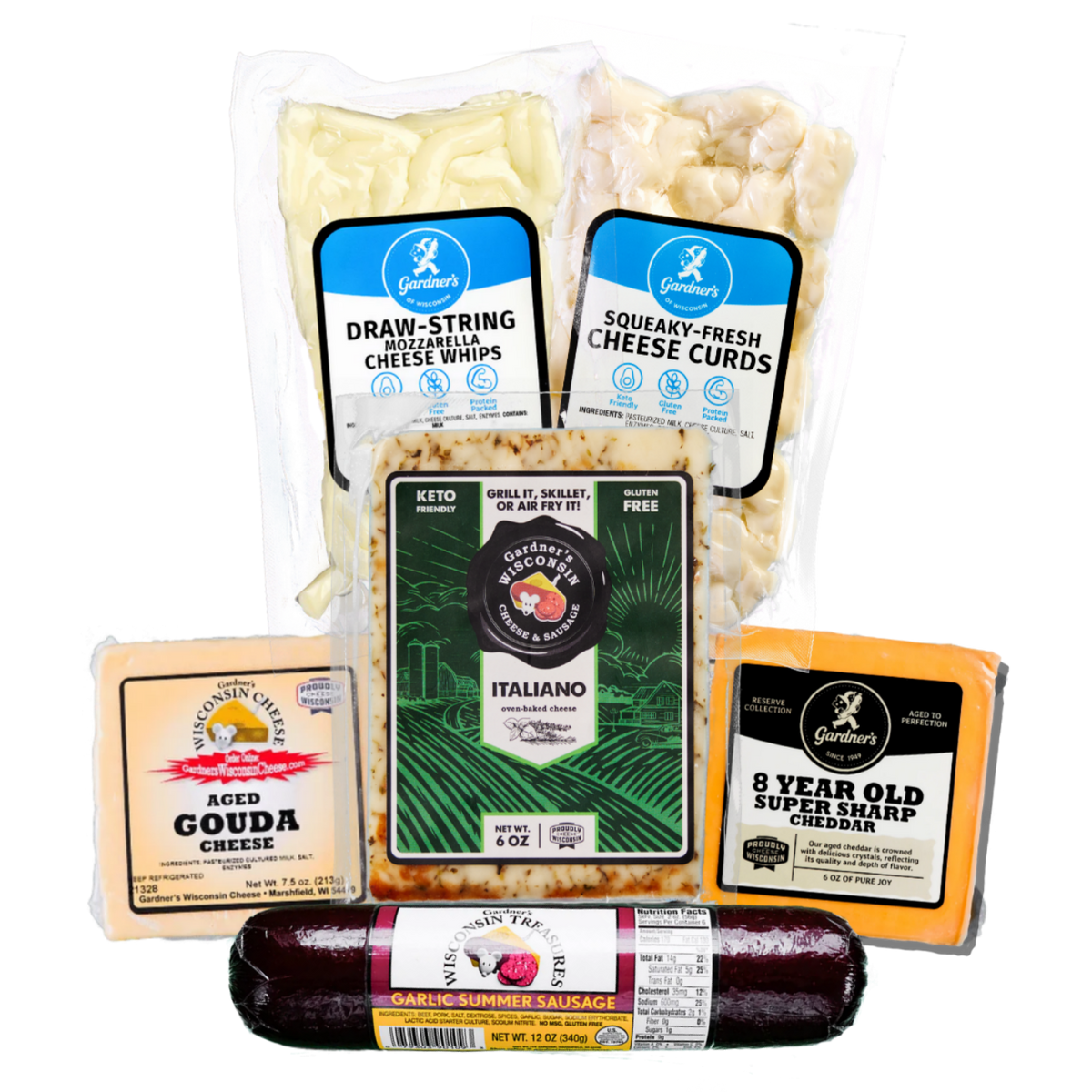
Here's why. Mold spreads through cheese via microscopic threads called “hyphae” that grow outward from the visible spot. In hard, low-moisture cheeses (think our 8-Year Cheddar or Aged Gouda), those threads can only travel a short distance before hitting the dense cheese structure. Cutting a 1-inch buffer around & below the mold removes the visible spot AND the invisible hyphae, leaving safe cheese behind.
In soft, high-moisture cheeses, the hyphae travel freely through the entire block within days. By the time you see a visible mold spot, the mold has already spread microscopically through the whole cheese. No amount of cutting can save it.
Which Cheeses Follow Which Rule?
|
Cheese |
Category |
If You See Mold |
|---|---|---|
|
Hard |
Cut 1 inch around, eat the rest |
|
|
Hard |
Cut 1 inch around, eat the rest |
|
|
Hard |
Cut 1 inch around, eat the rest |
|
|
Swiss |
Hard |
Cut 1 inch around, eat the rest |
|
Fresh mozzarella |
Soft |
Throw out entirely |
|
Ricotta / cottage cheese |
Soft |
Throw out entirely |
|
Cream cheese |
Soft |
Throw out entirely |
|
Brie / camembert |
Soft (with intentional rind) |
White rind = fine. Other colors = throw out |
|
Semi-soft |
Throw out entirely if fresh |
|
|
Shredded cheese |
Semi-soft (surface area) |
Throw out entirely |
|
Blue cheese |
Intentional mold |
Blue veins = fine. Other colors = check |
What Does Bad Mold on Cheese Look Like?

Not all mold is bad, so knowing what to look for matters. Here is the visual guide.
Green Mold
The most common unwanted mold. Fuzzy or powdery texture, bright green or blue-green color. On hard cheese: cut around it & keep going. On soft cheese: throw out. Green mold is the exact same species (Penicillium) used to make blue cheese intentionally, but on a cheese where it wasn't meant to be, it produces toxins.
Black Mold
Black spots with a fuzzy texture. Almost always bad news. Even on hard cheese, cut extra wide (2 inches instead of 1). Black mold can produce mycotoxins & shouldn't be eaten.
Pink or Red Mold
Rare, but always throw out. Pink or red patches usually indicate bacterial contamination rather than typical mold, & can be genuinely dangerous.
Gray Fuzzy Growth
Common on aged cheeses stored too long. On hard cheese: cut around it. On soft cheese: throw out.
White Fuzz (Sometimes OK)
On brie or camembert, white fuzzy rind is the intentional mold that makes those cheeses what they are. Safe & delicious. On any other cheese, white fuzz that wasn't there when you bought it is unwanted mold. Follow the hard/soft rule.
Blue-Green Veins
On blue cheese, gorgonzola, or Roquefort, these veins are the whole point. Perfectly safe. If you see blue veins on cheddar or gouda where they shouldn't be, that's unwanted mold. Trim it out or throw the block away.
What About Cheese Crystals? (Not Mold)
Sometimes what looks like mold on aged cheese is actually cheese crystals, the crunchy white specks you find in aged cheddar & parmesan. These are calcium lactate or tyrosine crystals & they are 100% safe. In fact, they're a sign of well-aged cheese. Read our full cheese crystals explainer for the deep dive.
Quick test: crystals are hard & crunchy. Mold is soft & fuzzy. If you can push it in with your fingernail, it's mold. If it resists, it's crystal.
How to Prevent Mold on Cheese
Once you know the science, prevention is straightforward.
Wrap It Right
Ditch the plastic wrap. Wrap cheese in parchment paper first, then loosely in plastic wrap. Parchment lets the cheese breathe (which mold hates) while plastic keeps the fridge air out. Bonus: your cheese will taste better because it isn't sweating in plastic.
Store in the Right Spot
The main compartment of the fridge, not the door (temperature swings when the door opens). The bottom shelves are usually the coldest. If your fridge has a cheese drawer, use it.
Use a Clean Knife Every Time
Cross-contamination happens when you cut cheese with a knife that touched other food. Use a clean cheese knife or wire slicer for every cut.
Buy What You'll Actually Use
A block of cheese that lives in your fridge for three months is going to grow mold. Buy smaller pieces more often. Fresh cheese from a real cheesemaker (like ours, shipped fresh from Wisconsin) is worth the freshness.
What About Shredded Cheese?
Bad news for the pre-shredded convenience crowd: shredded cheese molds faster than block cheese because of the massive increase in surface area. If you see even one mold spot on shredded cheese, throw out the entire bag. There's no way to cut around individual shreds, & the mold has almost certainly spread through the whole batch.
The fix: buy block cheese & shred it yourself. Our 8-Year Cheddar or Aged Gouda both grate on demand & keep for months longer than pre-shredded.
Can You Get Sick From Eating Moldy Cheese?
Rarely, but yes. Most cheese molds produce mycotoxins in very small quantities, & most healthy adults can tolerate them without noticing. Symptoms if you do get sick include nausea, vomiting, & digestive upset. Rare cases involve allergic reactions to mold spores.
People at higher risk (pregnant women, immunocompromised individuals, elderly, young children) should never eat cheese with unwanted mold, even if they've cut it away.
For everyone else: follow the hard/soft rule, use common sense, & when in doubt, throw it out. Cheese is not worth food poisoning.
FAQ
Can you eat moldy cheese?
Depends on the cheese. Hard aged cheeses (cheddar, gouda, parmesan, swiss): cut 1 inch around & below the mold; the rest is safe. Soft cheeses (mozzarella, ricotta, cream cheese, brie): throw out the entire block. Intentional molds on blue cheese & brie rinds are safe.
What does bad mold on cheese look like?
Green fuzzy spots (most common), black patches, pink or red discoloration, or gray fuzzy growth. All should be treated according to the hard/soft rule. Intentional molds (blue veins on blue cheese, white rind on brie) are safe.
Is green mold on cheese safe?
On hard cheese, yes. Cut 1 inch around & eat the rest. On soft cheese, no. Throw the whole thing out. Green mold on cheddar is the same species (Penicillium) used to make blue cheese, but it produces toxins when it grows on the wrong cheese.
Can you cut mold off cheese?
Only on hard, low-moisture cheeses (aged cheddar, gouda, parmesan, swiss). Cut at least 1 inch around & below the visible spot. On soft, high-moisture cheeses (mozzarella, ricotta, cream cheese), mold spreads invisibly through the whole block; throw it out.
What happens if you eat moldy cheese by accident?
Most healthy adults will be fine. Mild digestive upset is the most common reaction. Pregnant women, immunocompromised people, elderly, & young children should call their doctor if they've eaten unwanted mold. Don't panic; do pay attention to how you feel.
How do you know if cheese has gone bad besides mold?
Slimy or wet surface (should be dry), ammonia-like smell, bitter or sour taste, unusual discoloration (gray, greenish gray), or wet appearance on the cut edges. Any of these means the cheese has spoiled & should be thrown out.
Is mold on cheddar cheese OK?
Yes, on aged cheddar. It's a hard cheese so mold can be cut away with a 1-inch buffer around & below the visible spot. The remaining cheese is safe to eat. On soft cheddar spreads or dips, throw it out.
Can you eat blue cheese if it has other mold?
The blue veins are supposed to be there. But if you see green fuzz, pink patches, or other unusual colors on blue cheese, that's unwanted mold. Blue cheese is semi-soft, so treat unwanted mold like any soft cheese: throw it out.
The hard-vs-soft rule solves 90% of mold questions. The other 10% comes down to common sense & knowing your cheese. If you want to skip the mold problem entirely, our fresh Wisconsin cheeses ship directly from our factory & arrive fresh enough that you'll eat them before mold has a chance. Start with the Customer Favorites Package or browse the aged cheese collection for pieces that keep beautifully in the fridge.