











· By Daylon Gardner
What Are Cheese Crystals? The White Crunch on Aged Cheddar Explained
Bite into an aged cheddar. You hear it. That tiny, satisfying crunch.
Most people assume it's mold, salt, or something gone wrong. Spoiler: it's the opposite. Those crunchy white specks are a sign your cheese is the good stuff. Here's what they actually are, why they show up, & why every cheese-snob worth their rind gets excited when they see them.
Cheesy Takeaways
-
The crunchy white specks in aged cheese are calcium lactate or tyrosine crystals.
-
They form naturally during aging. They are 100% safe to eat.
-
Cheddar typically has calcium lactate crystals; parmesan & aged gouda have tyrosine crystals.
-
Crystals are a sign of high-quality, well-aged cheese, not a defect.
-
They are NOT mold, & they are NOT salt.
What Are Cheese Crystals?
Cheese crystals are tiny natural formations that develop inside aged cheese as proteins & sugars break down over time. They look like white or pale yellow specks, sometimes pinhead-sized, sometimes larger. They feel like a soft crunch when you bite into them. They are the cheese world's equivalent of a wine's tannins or a beer's hop bitterness, a signal that your cheese has been doing its job.

There are two main types of cheese crystals, & they show up in different cheeses for different reasons.
The Two Main Types of Cheese Crystals
Calcium Lactate Crystals (Found Mostly in Aged Cheddar)
Calcium lactate forms when calcium binds with lactic acid as the cheese ages. It's most common in aged cheddars. You'll see them on the surface (sometimes mistaken for mold) & inside the cheese as small white specks. They taste neutral. They have a soft, almost grainy crunch.
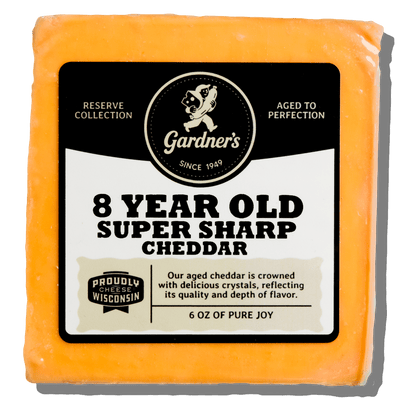
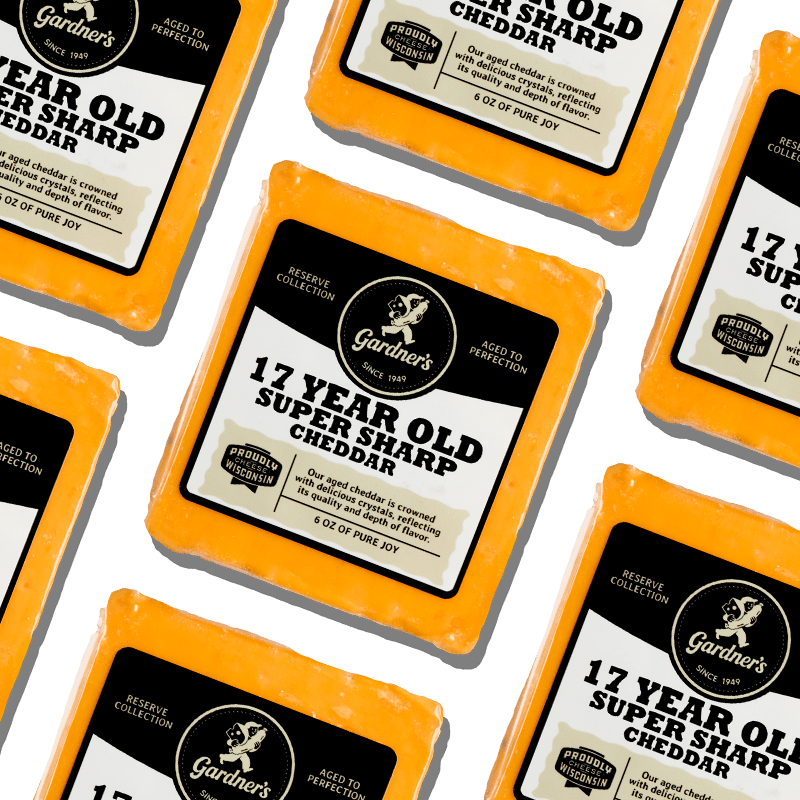
Our 8-Year, 13-Year, and 17-Year cheddars are absolutely covered in them. That's not a flaw. That's the receipt for the aging.
Tyrosine Crystals (Found Mostly in Aged Parmesan & Aged Gouda)
Tyrosine is an amino acid. As proteins break down during long aging, free amino acids accumulate & some crystallize out. Tyrosine crystals are firmer & crunchier than calcium lactate, & they're what gives aged parmesan & aged gouda that signature "pop" when you bite in.
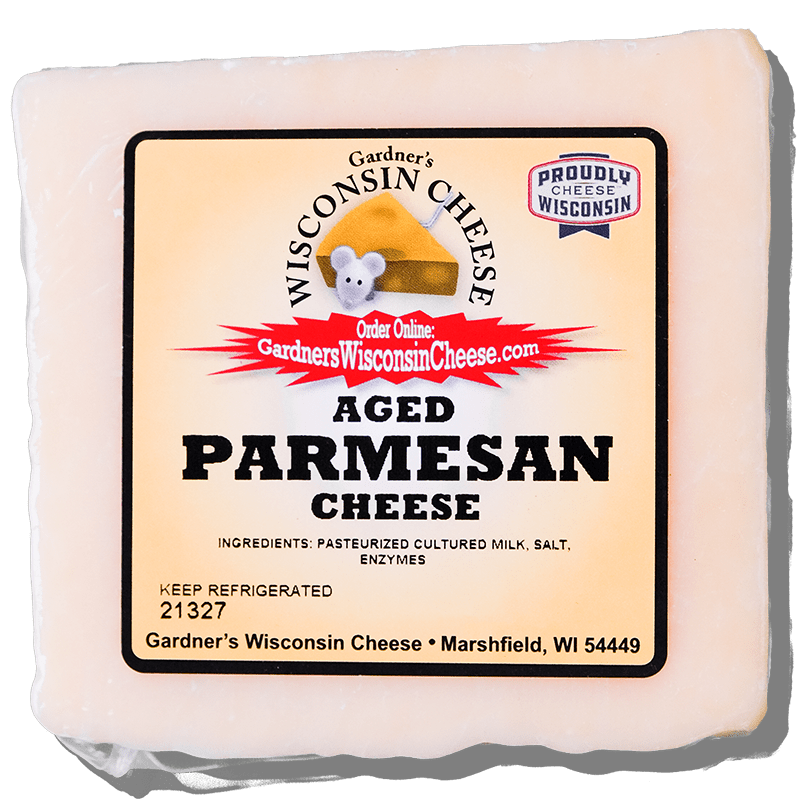
If you've ever bitten into a chunk of our Aged Parmesan or Aged Gouda & felt that bright crunch, that's tyrosine doing its work.

Are Cheese Crystals Safe to Eat?
100% yes. Cheese crystals are a natural part of the aging process. They are not mold, not bacteria, not contamination. They are concentrated calcium or amino acid that has crystallized over months or years. You can eat them without a second thought.
In fact, in the cheese world, they're considered the best part. Cheesemakers brag about them. Old-school turophiles seek them out.
Cheese Crystals vs Mold: How to Tell the Difference
This is the question people search for the most, & the answer is honestly pretty simple once you know what to look for.
|
Cheese Crystals |
Mold |
|---|---|
|
Hard, gritty, or crunchy texture |
Soft, fuzzy, or powdery texture |
|
White or pale yellow |
Green, blue, black, gray, pink |
|
Even distribution throughout cheese |
Often surface only, growing outward |
|
No smell |
Musty or sour smell |
|
Found in well-aged cheese |
Found on cheese left too long after opening |
If it crunches, it's a crystal. If it's fuzzy or smells off, it's mold (and you should cut at least an inch around it on hard cheese, or toss it entirely on soft cheese).
Why Do Crystals Form in Some Cheeses & Not Others?
Three factors:
-
Aging time. The longer the cheese ages, the more proteins break down & the more crystals form.
-
Cheese type. Hard, low-moisture cheeses like cheddar, parmesan, & aged gouda crystallize. Soft cheeses like brie or fresh mozzarella don't.
-
Storage conditions. Cool, slightly humid environments favor crystal formation. Cheesemakers control these conditions deliberately.
Young cheeses haven't aged long enough. Soft cheeses don't have the structure to hold crystals. So when you find a wedge that crunches, you've found one with both age & character.
Where to Find Cheese Crystals (& What to Pair Them With)
If you want to taste the difference age makes, you need to taste a few aged cheeses side by side. We'd suggest building a flight:
-
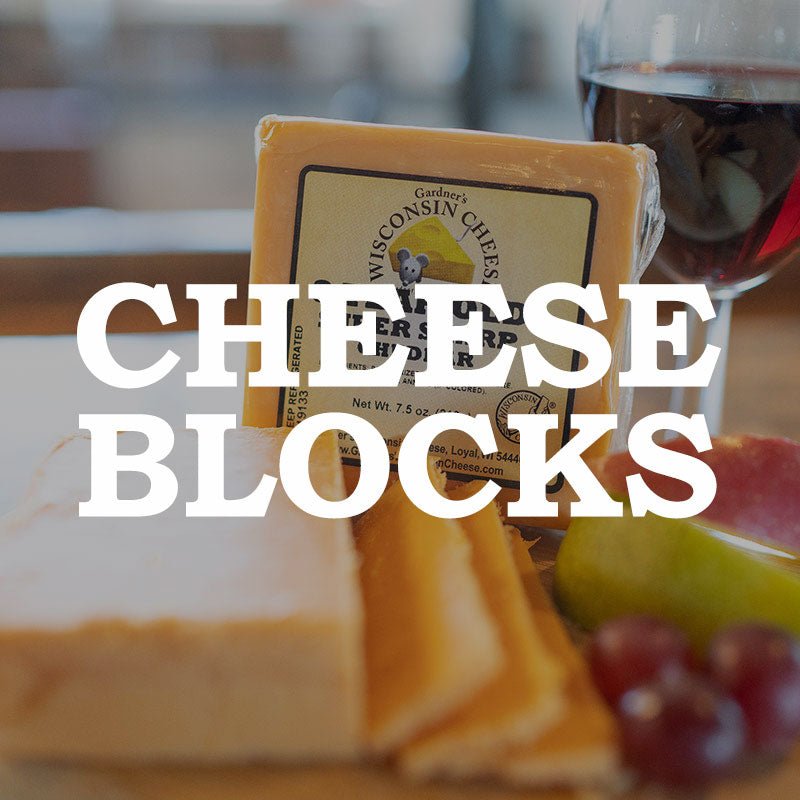
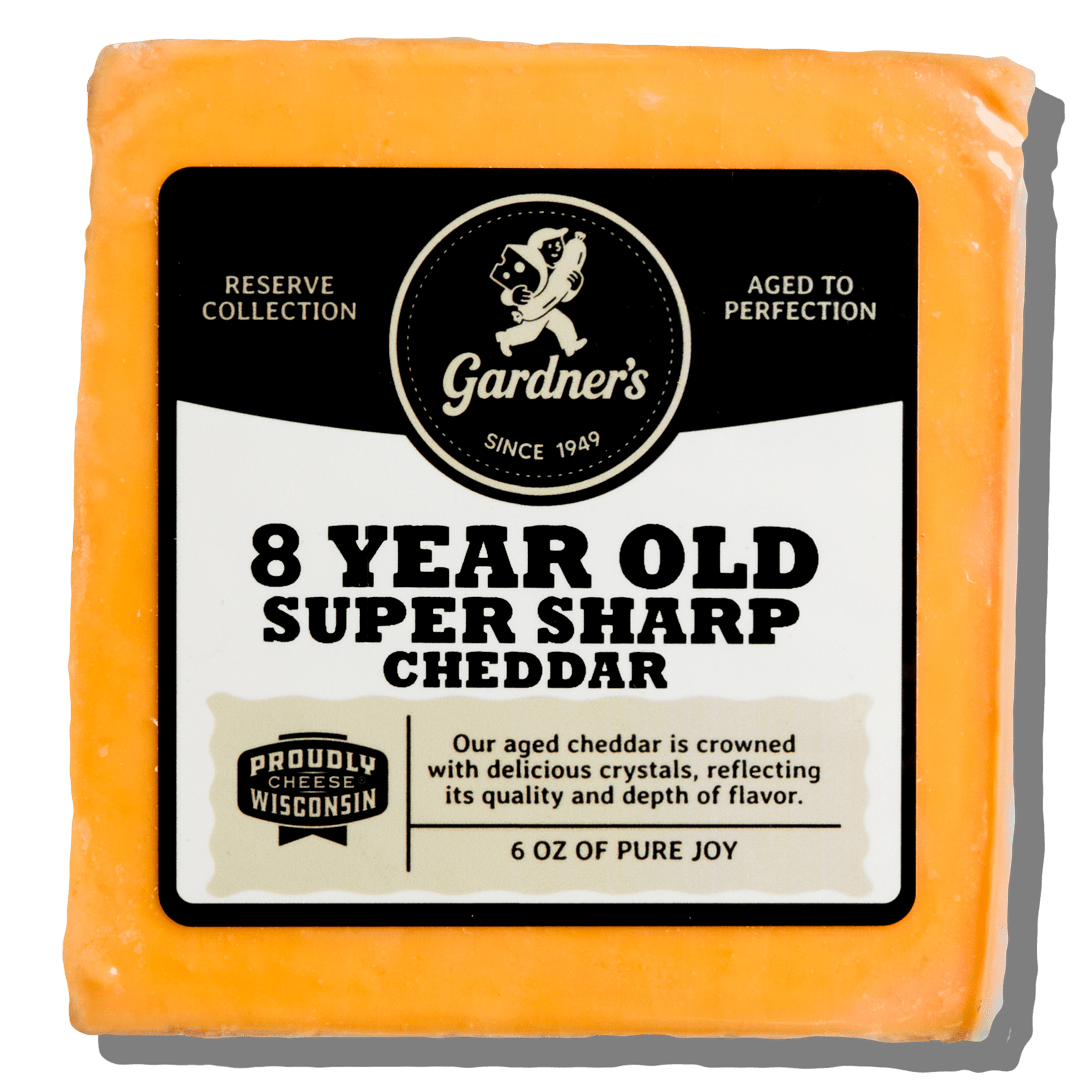
Start with our 8-Year Super-Sharp Cheddar. Solid crystal density, classic cheddar bite.
-
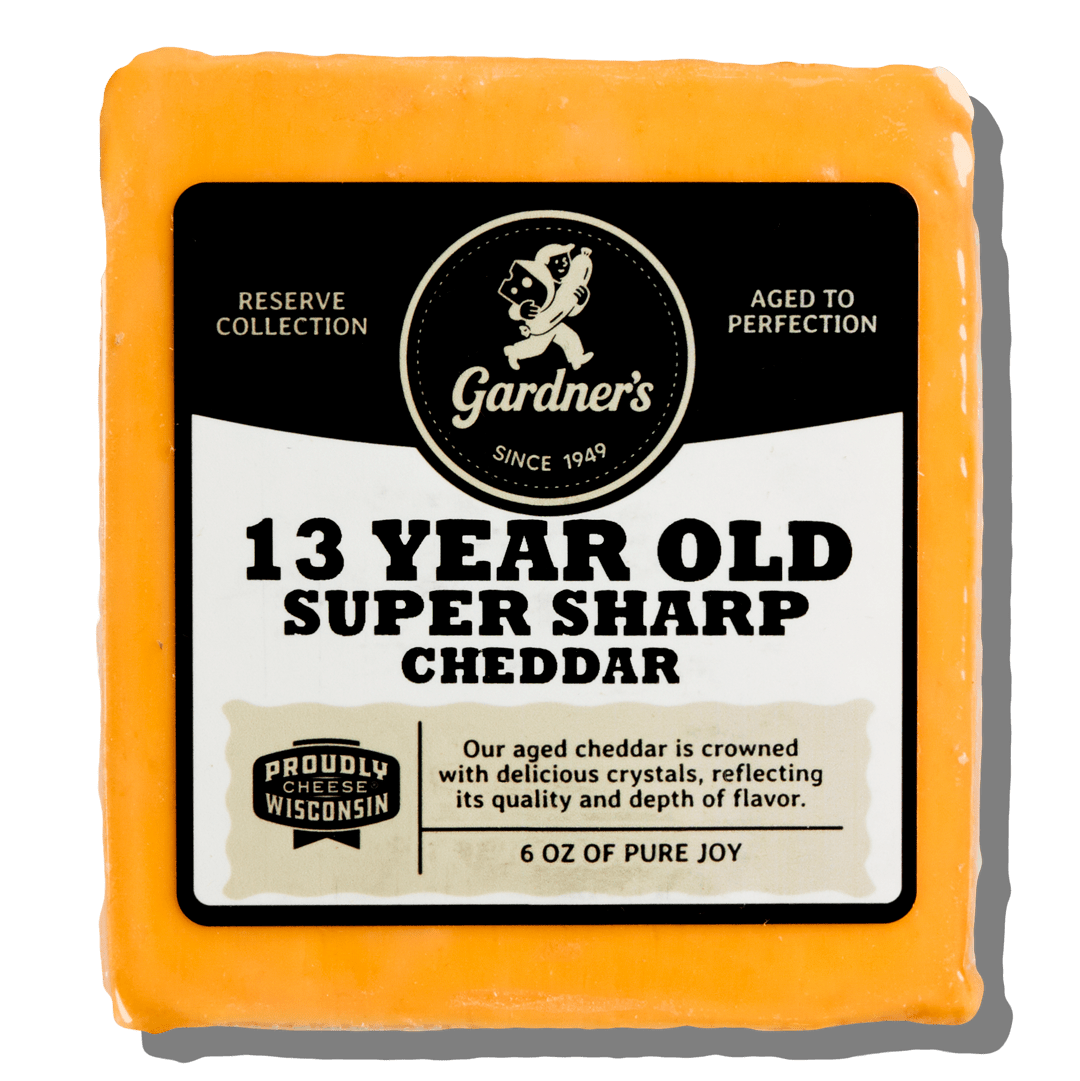
Move up to the 13-Year Super-Sharp Cheddar. Bigger crystals, deeper flavor.
-
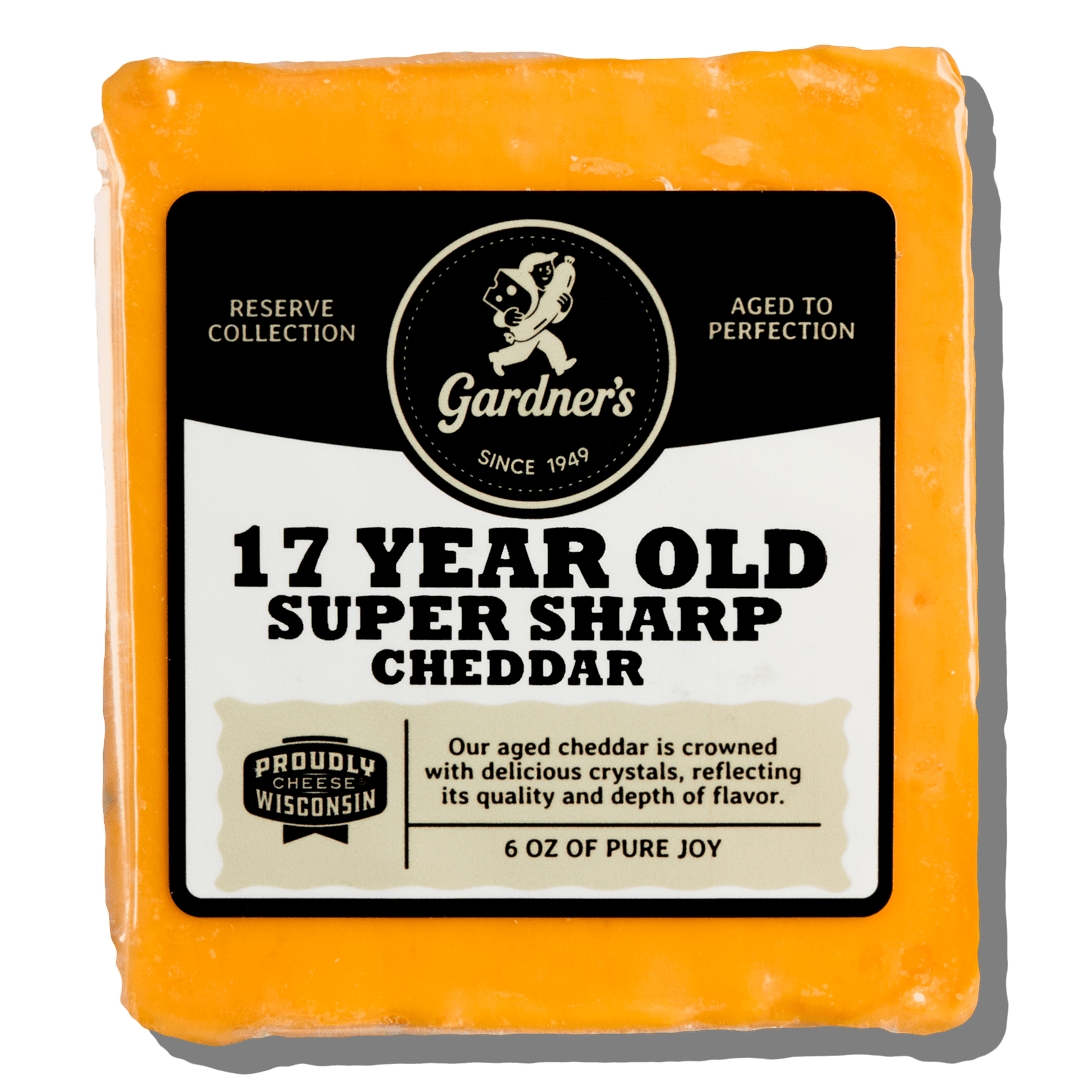
Finish with the 17-Year Super-Sharp Cheddar. The pinnacle. Almost every bite has crunch.
-
Add our Aged Parmesan for tyrosine-style crystals as a comparison.
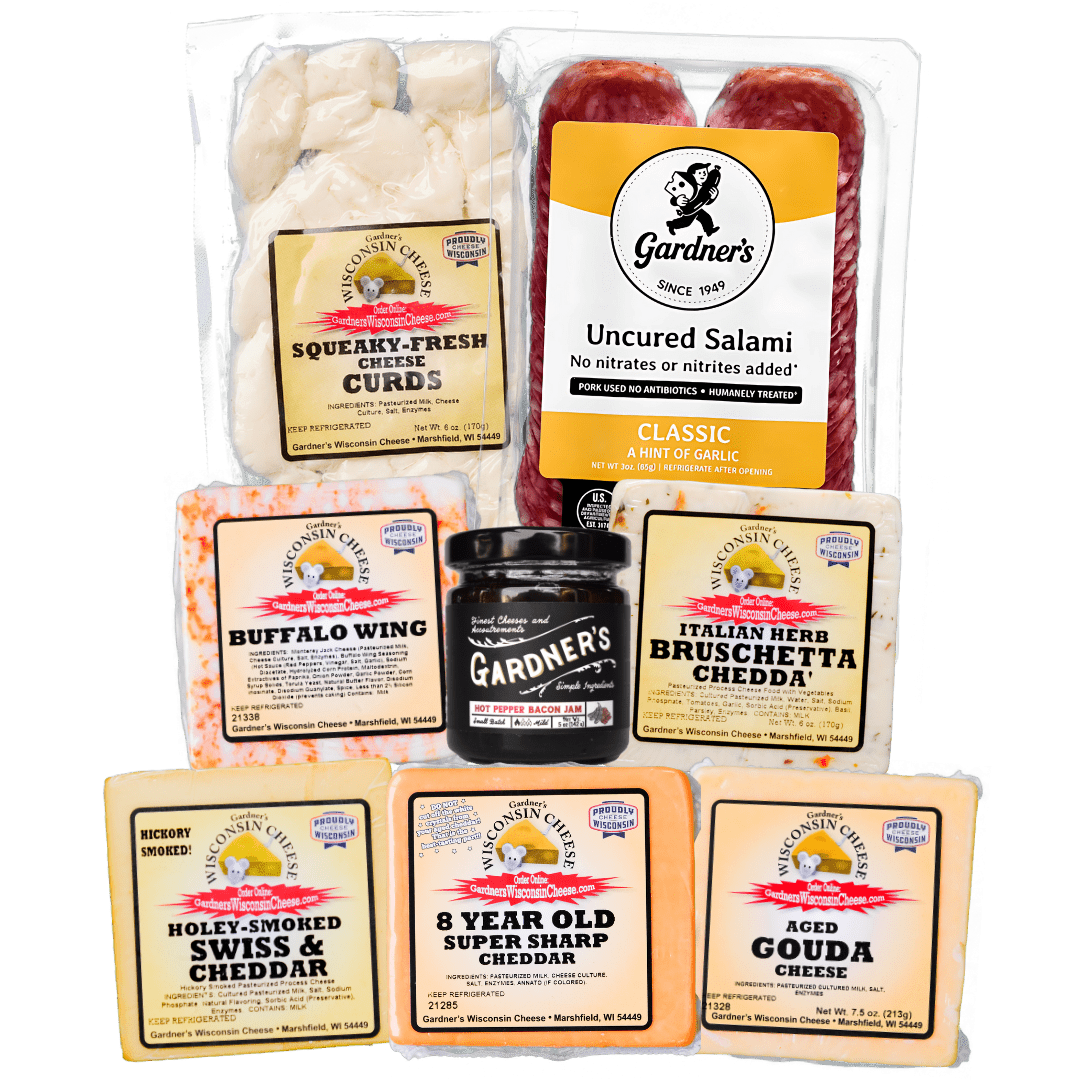
Pair the flight with a drizzle of Hot Honey Drizzle, a few Garlic Summer Sausage slices, & a bottle of port wine or stout. The Vintage Package is essentially this flight in a box, if you'd rather skip the sourcing.

Frequently Asked Questions
What are the white crystals in cheddar cheese?
They are calcium lactate crystals, which form naturally as cheese ages. They are completely safe to eat & a sign of well-aged, high-quality cheddar.
What are the crunchy bits in parmesan cheese?
Tyrosine crystals. They form when amino acids release & crystallize during long aging. Also completely safe & a sign of quality.
Are cheese crystals safe to eat?
Yes, 100% safe. They are made of calcium lactate or tyrosine (an amino acid), both of which are natural components of cheese. Most cheese lovers consider them the best part.
Are cheese crystals salt?
No. People often assume they're salt because they look similar, but they are calcium or amino acid crystals. They taste neutral, not salty.
Why does my cheddar have white spots?
If they're hard & crunchy: calcium lactate crystals, totally normal. If they're fuzzy or smell musty: mold. Crystals are good news. Mold means you cut around it (on hard cheese) or toss it (on soft cheese).
Can I eat cheese with crystals on the surface?
Yes. Surface crystals are calcium lactate that has migrated outward. They look powdery sometimes, which is why they get confused for mold. If they wipe off as a hard, gritty residue & don't smell, you're good.
The Crunch Is the Point
If you've been eating cheese without finding crystals, you've been missing the best version of cheese. Start with our aged cheddar lineup, or grab the Super Sharp Cheddar Package to taste the full range. One bite of a 17-year & you'll understand why cheesemakers consider crystals the receipt of a job done right.
