














· By Daylon Gardner
Cheese Slicers vs Cheese Knives vs Wire Cutters: The Wisconsin Take on Doing It Right
You're standing in front of a cheese board. You have a knife in your hand. The first slice goes great. The second slice goes great. The third slice goes off the rails, the cheddar crumbles, & you're now eating cheese dust off the cutting board.
Most people blame the cheese. The cheese is fine. You're using the wrong tool.
Cheese tools matter more than people think. The right slicer turns aged cheddar into clean, even shavings. The wrong tool turns it into rubble. Here's the cheesemaker's guide to picking the right cheese slicer, knife, or wire cutter for what's actually on your board.
Cheesy Takeaways
-
Different cheese textures need different tools. There is no one-size-fits-all answer.
-
Wire cheese slicers are best for hard cheeses (aged cheddar, parmesan, gouda).
-
Cheese knives work for semi-soft & medium cheeses (jack, swiss, smoked).
-
Cheese planes shave thin slices for sandwiches & boards.
-
A good wire slicer is the single best $20 investment for any cheese-eating household.
Why Cheese Tools Actually Matter

Cheese is structurally different from almost every other food. Hard cheeses are crystalline & crumbly. Soft cheeses are sticky & sloppy. A bread knife cuts through both badly. A chef's knife works in a pinch but tears soft cheese & crushes hard cheese. The right tool gives you a clean cut, preserves the texture, & makes the cheese taste better because the slice surface area releases more aroma.
There are four main cheese tools that cover 95% of what you'd ever do with a cheese block. Most kitchens own zero of them. Most cheese fans need two.
The Four Cheese Tools You Should Know
1. The Wire Cheese Slicer (the MVP)

A wire cheese slicer is a thin metal wire stretched across a frame, dragged across a cheese block to produce thin, even slices. Best for hard & semi-hard cheeses. Our Wire Cheese Slicer handles aged cheddar, gouda, smoked cheeses, & block jack with no struggle. The wire cuts cleanly without crumbling because it's thinner than any blade, so it doesn't push or compress the cheese as it goes through.
Best for: aged cheddar (8+ years), aged gouda, smoked cheeses, block cheeses for sandwiches.
Not great for: soft cheeses (brie, fresh mozzarella), crumbly aged parmesan.
2. The Cheese Knife (Multi-Tool)

Cheese knives come in a few different shapes depending on what they're cutting. A blunt-edge cheese knife with holes (called a Skeleton Knife) is designed for soft & semi-soft cheeses. The holes prevent sticking. A pointed cheese knife is for crumbly hard cheeses where you want to break off pieces rather than slice them. A cheese cleaver works for almost any block.
Best for: semi-soft cheeses (jack, swiss), brie & camembert, breaking chunks off hard wheels.
Not great for: precise thin slicing of any cheese.
3. The Cheese Plane

A cheese plane looks like a small spatula with a sharp slot in the middle. You drag it across a block & it shaves off paper-thin slices. Norwegians invented these & use them on everything. Excellent for sandwich layers, garnishes, & ultra-thin cheese plate slices.
Best for: thin slicing of semi-firm cheeses, sandwich cheese, decorative shavings.
Not great for: aged or crumbly cheeses (the plane catches on crystals & tears).
4. The Cheese Board Cutter (the Showpiece)

A cheese board cutter is essentially a wire slicer integrated into a wooden cheese board. Usually a hinged wire arm that swings down across the cheese sitting on the board. They look great on a counter, they handle hard cheeses well, & they're satisfying to use. We have a full piece on the cheese board cutter vs wire cheese slicer comparison if you're trying to decide between the two formats.
Best for: hard cheeses you serve regularly, looking fancy on the counter, all-in-one storage.
Not great for: tight kitchen counters, anyone who doesn't want a dedicated cheese board taking up space.
Which Cheese Slicer for Which Cheese: The Lookup Table


If you only remember one thing from this post, remember this table.
|
Cheese |
Best Tool |
Why |
|---|---|---|
|
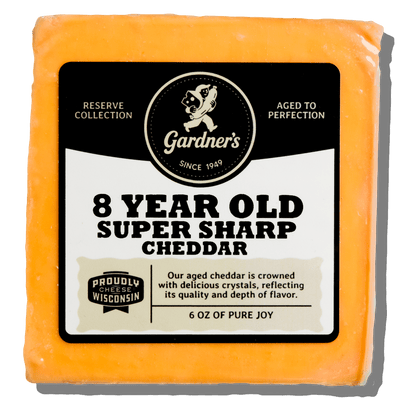
8-Year Cheddar |
Wire slicer |
Crumbly + crystalline; wire cuts clean |
|
13-17-Year Cheddar |
Cheese knife (pointed) |
Too crumbly to slice; break off pieces |
|
Aged Gouda |
Wire slicer |
Firm but creamy; wire is perfect |
|
Smokey Bacon Cheddar |
Wire slicer |
Semi-firm; clean wire cuts |
|
Pepper Jack |
Cheese knife or wire |
Either works; wire is faster |
|
Buffalo Wing Cheese |
Wire slicer |
Semi-firm; wire is clean |
|
Holey-Smoked Swiss |
Wire slicer or plane |
Both work; plane for sandwich layers |
|
Aged Parmesan |
Cheese knife (pointed) |
Break into chunks; don't slice |
|
Fresh Mozzarella |
Sharp serrated knife |
Wet & sticky; needs sawing motion |
|
Brie |
Skeleton knife (with holes) |
Soft & sticky; holes prevent dragging |
How to Actually Use a Wire Cheese Slicer

Most people use a wire slicer wrong, then blame the slicer. The technique:
-
Bring the cheese close to room temperature first. Cold cheese fights the wire.
-
Position the cheese on a flat surface (counter or cutting board).
-
Lay the slicer wire flat on top of the cheese block.
-
Press down gently AND pull the slicer toward you in one smooth motion. Don't saw.
-
If the wire catches, lift & restart. Don't force it.
-
Wipe the wire clean between cheeses if you're slicing more than one.
With this technique, our wire slicer handles even aged cheddars with crystals & gives you slices the same thickness as the wire gauge. Clean, even, no crumbs.
How Thick Should a Cheese Slice Be?
Depends on what you're doing with it. Quick guide:
-
Sandwich layers: 1/16 to 1/8 inch (use a cheese plane for the thinnest)
-
Cheese board slices: 1/4 inch
-
Cheese cubes for charcuterie: 1/2 inch cubes
-
Snacking slabs: 1/2 to 3/4 inch
-
Cheese plate "wedges": triangular, ~1 inch at the thick edge
Frequently Asked Questions
What's the difference between a cheese slicer & a cheese knife?
A cheese slicer (especially a wire slicer) produces uniform thin slices & is best for hard cheeses. A cheese knife is broader & better for soft, semi-soft, or crumbly cheeses where you want to chunk or break the cheese rather than slice it. Most kitchens benefit from owning both.
Can a wire cheese slicer cut hard cheese?
Yes. Wire slicers are actually best for hard cheese. The wire is thinner than any blade, so it cuts through aged cheddar, gouda, & similar cheeses cleanly without crumbling. Just bring the cheese close to room temperature first for the cleanest cut.
Can you use a regular knife as a cheese slicer?
In a pinch, yes, but you'll get worse results. Regular knives compress the cheese as they cut, which is fine for soft cheeses but crushes aged or crumbly ones. A wire slicer or a dedicated cheese knife is dramatically better for cheese boards.
What's the best cheese slicer for cheddar?
A wire cheese slicer. Cheddar (especially aged cheddar) is firm but crumbly, & the wire cuts through cleanly without crushing the texture. Our Wire Cheese Slicer is built for exactly this.
How do you sharpen a cheese slicer?
Wire cheese slicers don't need sharpening. The wire either works or it's broken. If it's not cutting cleanly, it's usually because the cheese is too cold or the wire is dirty. Replacement wires are widely available for most slicer brands.
Are cheese boards with built-in cutters worth it?
If you serve cheese regularly & have counter space, yes. They look great & integrate the slicer into the board. If you have limited counter space, a standalone wire slicer is more flexible & easier to store.
How do I clean a cheese slicer?
Rinse with warm soapy water, dry immediately. Don't put wire slicers in the dishwasher (the heat can warp the frame & loosen the wire). Wipe between different cheeses to avoid flavor crossover.
The Wisconsin-Approved Cheese Tool Setup


Here's the minimum kit for anyone who eats Wisconsin cheese more than once a week:
-
A wire cheese slicer for cheddars, gouda, & smoked cheeses (the everyday tool)
-
A pointed cheese knife for breaking off chunks of aged parmesan or 17-year cheddar
-
A wood cutting board (preserves the wire slicer & looks good on a cheese plate)
That's it. Total investment: about $40. Lifetime value: incalculable.

Slice It Right, Eat It Better
Cheese tools are one of those upgrades nobody talks about until they make one. Then they wonder how they ever did it the other way.
Pick up our Wire Cheese Slicer, pair it with the 8-Year Super-Sharp Cheddar or the Vintage Package for a full aged-cheese flight, & welcome to slicing cheese the way it was meant to be sliced.