






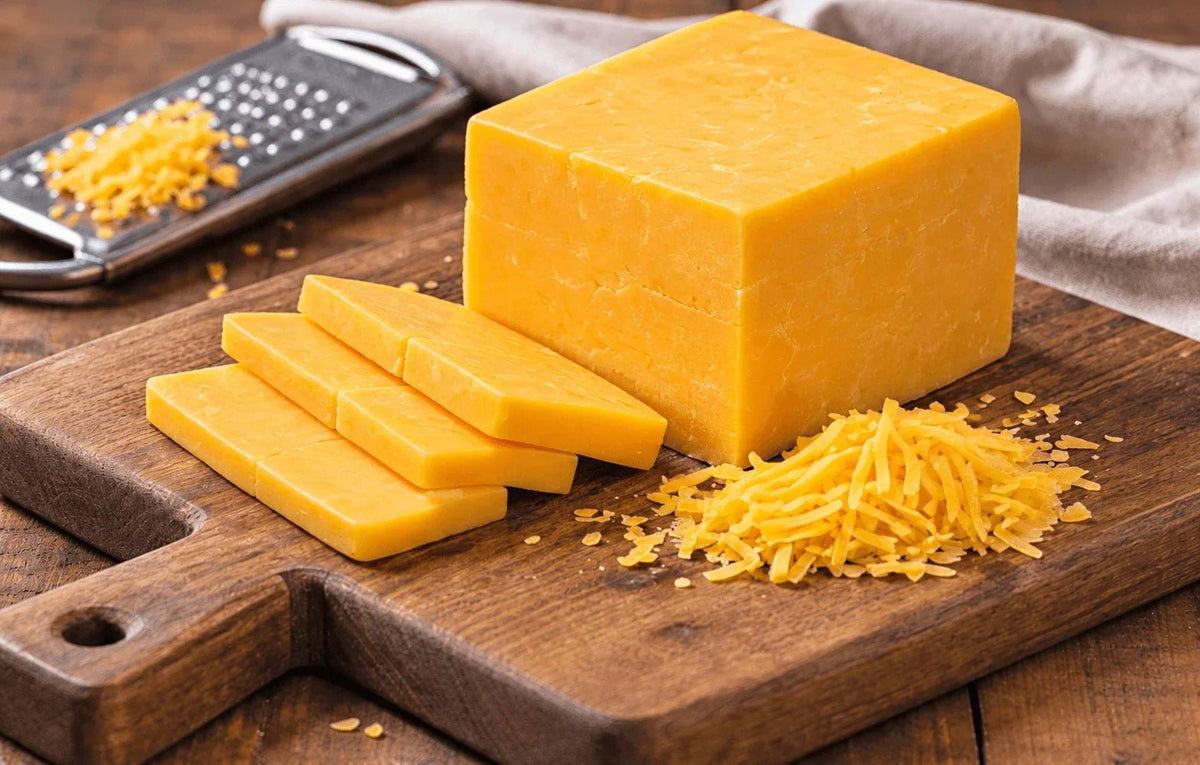
How to Make Cheddar Cheese: A Walkthrough
How to make cheddar cheese, in one breath: warm the milk, add culture & rennet, cut & cook the curd, drain the whey, stack & turn the curd slabs until they're springy (that's cheddaring), mill them into pieces, salt, press & age the block anywhere from 2 months to 20 years. At home it's a full day of work plus months of patience. At a Wisconsin plant it's the same steps at a bigger scale.
This is the walkthrough we'd give a neighbor who asked: what happens at each step, why it happens & where a home kitchen stops & an aging room takes over. If you care more about eating the stuff than making it, our guide to sharp cheddar cheese covers mild to 20-year from the tasting side.
- Cheddar needs four ingredients: milk, culture, rennet & salt. Annatto for color is optional.
- Ten steps: warm, culture, rennet, cut, cook, drain, cheddar, mill, salt & press, then age.
- Cheddaring (stacking & turning curd slabs) is the step that makes it cheddar & not something else.
- Fresh milled curds are cheese curds. Press them & you have cheddar. Age it & you have sharp cheddar.
- At home, a gallon of milk makes about a pound of cheese. The make takes a day; the aging takes 2 months minimum.
- Time does the rest: crystals, crumble & sharpness all come from years of aging.
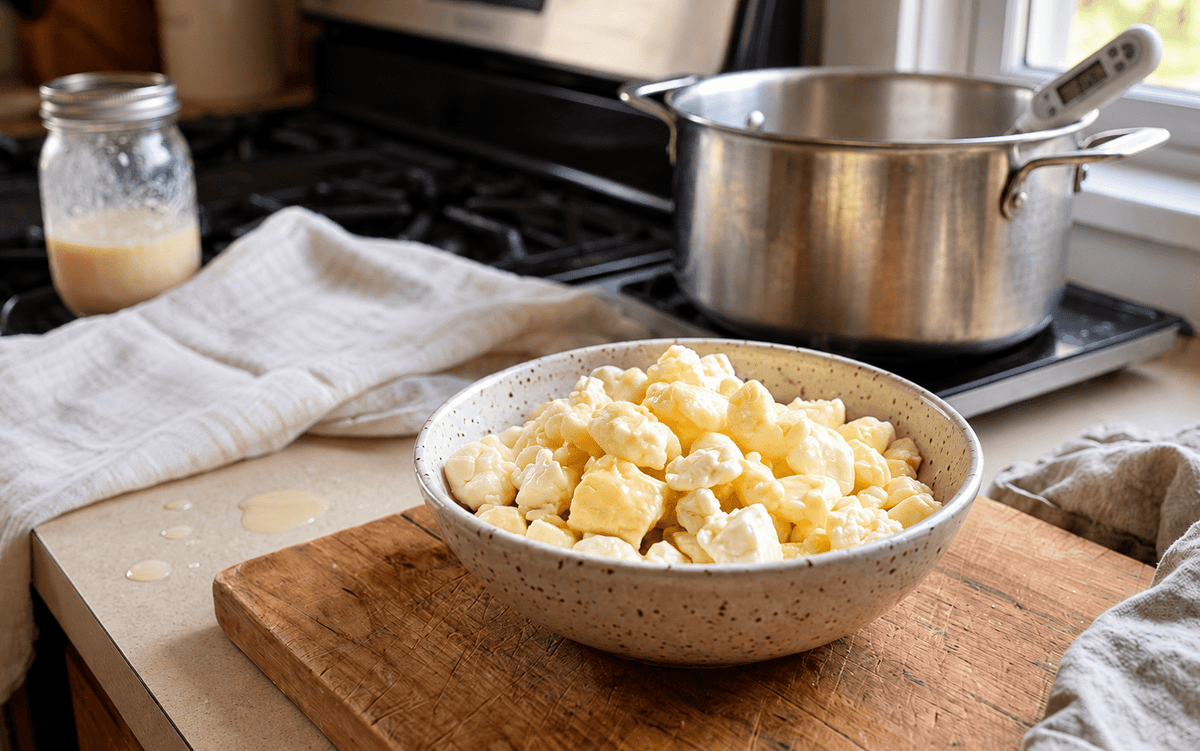
How Do You Make Cheddar Cheese? The 10 Steps at a Glance
Every cheddar, from a 2-pound kitchen wheel to a 640-pound block, runs through the same ten steps:
- Warm the milk to 86 to 88°F.
- Add culture (mesophilic bacteria) & let the milk ripen for 45 minutes to an hour.
- Add rennet & let it set until the curd breaks cleanly, 30 to 45 minutes.
- Cut the curd into quarter- to half-inch cubes.
- Cook the curd, raising the temperature slowly to about 100 to 102°F over 30 to 45 minutes while stirring.
- Drain the whey & let the curd knit into a mat.
- Cheddar it: cut the mat into slabs, stack them & turn them every 10 to 15 minutes for an hour or two.
- Mill the slabs into finger-sized pieces.
- Salt & press: about 2 percent salt by weight, then into a mold under increasing pressure for 12 to 24 hours.
- Age it: dry the block, seal it (wax, cloth or vacuum) & hold it at 50 to 55°F for 2 months to 20 years.
That's how to make cheddar anywhere on earth. Everything below is the why. Curd nerds, settle in.
Cheddar Cheese Ingredients
Four, plus a fifth that's optional. Every one of them has a job.
| Ingredient | What it does |
|---|---|
| Milk | Whole cow's milk, pasteurized at most plants & raw at some farmhouses. Its fat & protein set the ceiling on everything that follows. |
| Culture | Mesophilic lactic bacteria eat milk sugar (lactose) & make lactic acid. Acid firms the curd, sours the flavor &, over years, strips nearly all the lactose out of the block. |
| Rennet | The enzyme that turns liquid milk into a gel you can cut. Animal rennet is traditional; microbial & vegetable rennets do the same job & make a cheese vegetarians can eat. |
| Salt | Flavor, yes, but mostly control: salt slows the bacteria, pulls out moisture & protects the block through years of aging. |
| Annatto (optional) | A seed extract that turns cheddar orange. It does nothing to flavor. Without it, cheddar is white to pale yellow. |
That's the whole list. The difference between a mild cheddar & a 20-year one isn't the recipe. It's time.
Step by Step: From Milk to Curd
Steps 1 through 6 are shared with almost every cheese on earth, so we'll go fast. The milk is warmed so the culture is comfortable. The culture ripens the milk for most of an hour, building a little acidity. Rennet goes in & the milk sets into a gel firm enough to cut cleanly with a knife.
Cutting the curd is the cheesemaker's first real decision. Small cubes shed more whey & make a drier, firmer cheese; big cubes hold on to moisture. Cheddar is cut small. Then the curd is cooked: the temperature climbs slowly while someone stirs so the cubes don't mat together, & each cube shrinks & toughens as whey leaves it. Finally the whey drains off & the curd settles into a solid mat in the bottom of the vat.
Here's the part Wisconsin knows & most of the world doesn't: stop a little past this point, salt the fresh curd & bag it, & you have cheese curds. Squeaky, salty, unpressed, unaged cheddar. A bag of Cheese Curds is cheddar that left the line before step 9. The full curd story, with the home method & the reasons you'll probably just order a bag instead, is in how to make cheese curds.
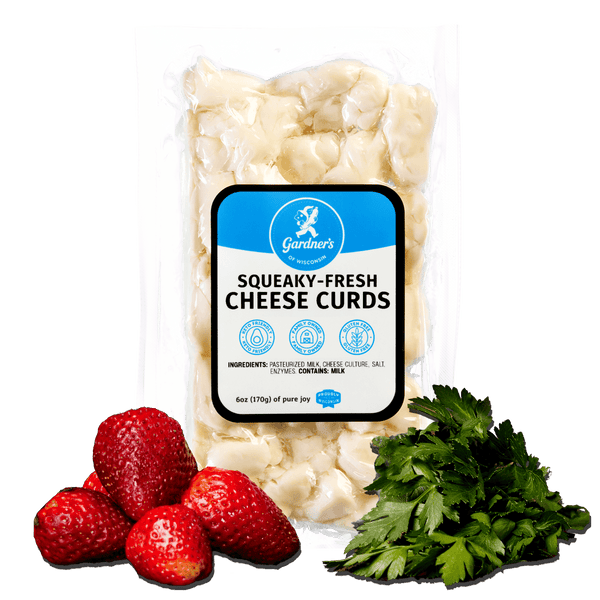
Cheese Curds (Squeaky Cheese)
Cheddar that left the line before step 9. Fresh, salty & squeaky, shipped cold-packed.
Shop Cheese CurdsCheddaring: The Step That Makes It Cheddar
Cheddaring is where the cheese gets its name & its texture. The drained curd mat is cut into slabs, & the slabs are stacked two or three high & flipped every 10 to 15 minutes for an hour or two. Two things happen while they sit.
First, the weight of the stack squeezes out more whey, & the slabs flatten & knit into a dense, layered sheet. Second, & more important, the acidity keeps climbing the whole time. The cheesemaker is watching for a specific texture, often described as cooked chicken breast: when a slab tears into long fibers instead of crumbling, the acid has done its work & it's time to move on.
"Same milk, same rennet, same salt. The stacking & turning is what makes it cheddar."
Skip cheddaring & you get a different cheese entirely, something closer to a Colby or a Monterey Jack. Rush it & the cheddar ends up soft & mild. Overdo it & it's sour & crumbly from day one. (No pressure.)
Milling, Salting & Pressing
The cheddared slabs are milled, which just means chopped into pieces about the size of a finger. Milling opens up surface area so the salt reaches everything evenly, & it's why a cold piece of cheddar snaps with that slightly fibrous, flaky break.
Salt goes on the milled curd, roughly 2 to 2.5 percent of the curd's weight, & gets tossed through. Then the curd goes into a mold under pressure, light at first & heavier over 12 to 24 hours, until the pieces fuse into one solid block & the last loose whey is gone. Out of the press, the cheese dries for a day or two, then gets sealed for aging.
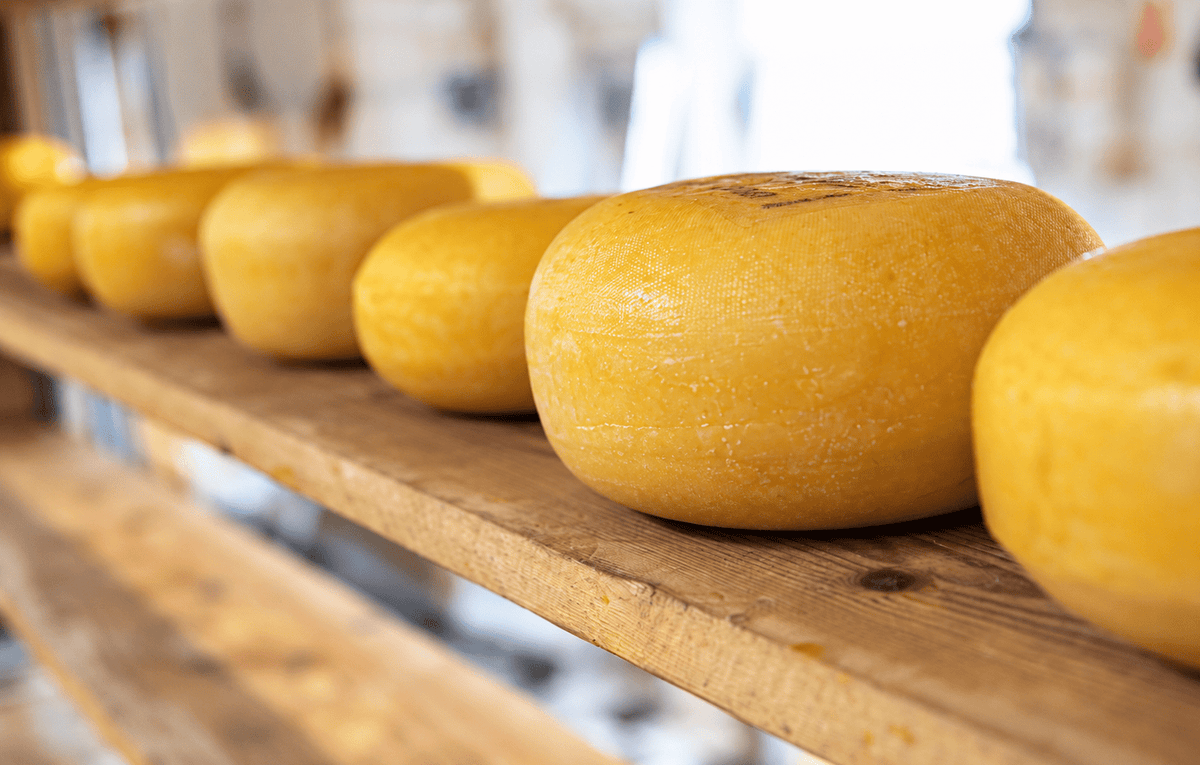
Cheddar wheel vs block vs farmhouse cheddar
The traditional format is a cheddar wheel (in England, a truckle): wrapped in cloth, brushed with lard & aged in a cave or cellar with a natural rind. The standard American format is a 40-pound block, vacuum-sealed in plastic, which ages rindless & loses almost no weight to evaporation; bigger plants also make 640-pound blocks that get cut down later. Both make real cheddar. Wheels develop earthier, more variable flavor from the rind. Blocks are more consistent & are where most Wisconsin cheddar starts.
Farmhouse cheddar means two things depending on who's talking. In England it's a cloth-bound wheel made on the farm from its own herd's milk & aged with a rind. In American home cheesemaking it's a simplified recipe that stirs the curd instead of fully cheddaring it, which cuts an afternoon off the process at the cost of some cheddar character. Making your first cheese? Farmhouse cheddar is the one to start with.
Aging: Where Mild Becomes Sharp
A block fresh out of the press tastes like salty, rubbery milk. Everything you think of as cheddar flavor shows up during aging. Over months, enzymes & bacteria break proteins into savory amino acids, fat into fruity & nutty compounds, & the last of the lactose into acid. Moisture slowly leaves. The texture goes from pliable to firm to crumbly.
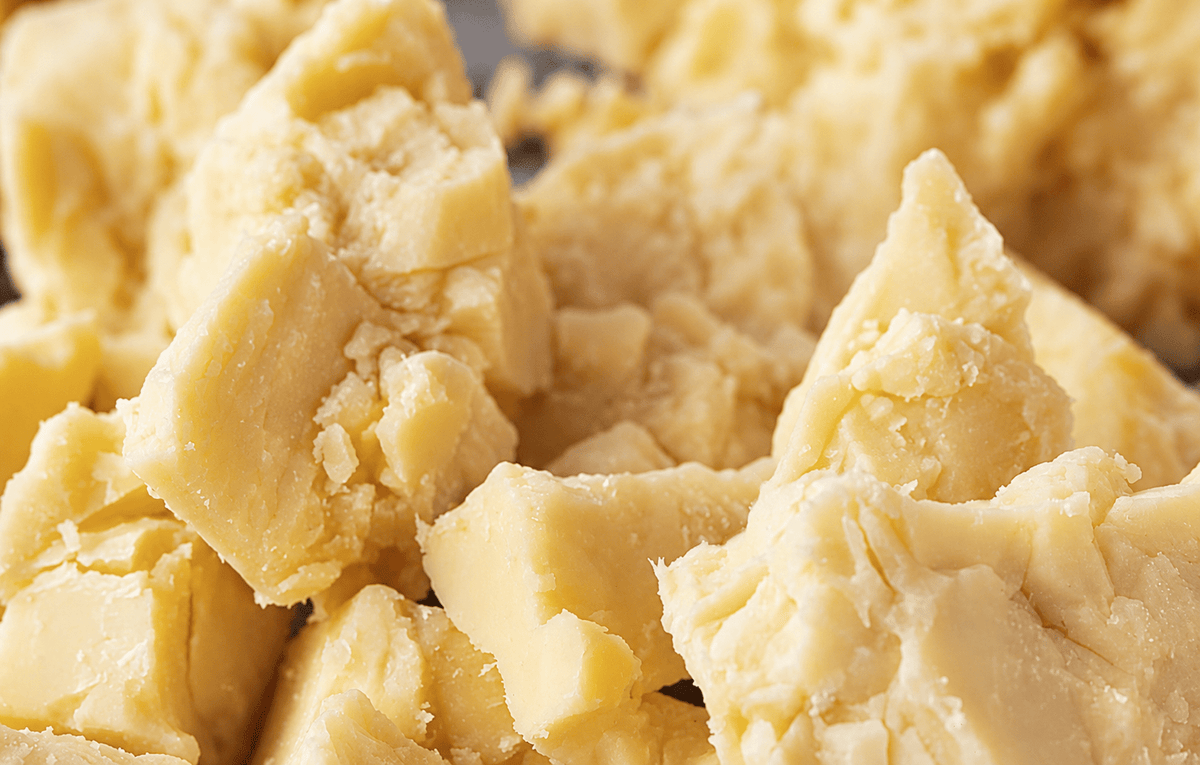
Roughly: mild is 2 to 3 months, medium around 6, sharp about a year & extra sharp 18 months to 2 years. Past that, you're into long-aged cheddar, & that's where things get legen-dairy.
Two things happen in long-aged cheddar that worry first-timers & delight everyone else. Crunchy white specks form: those are cheese crystals, mostly calcium lactate, & they're a sign the cheese is old & well made. And the block stops slicing cleanly & starts breaking into shards. We get asked about that enough that we wrote up why aged cheddar cheese crumbles; the short version is that crumble is what a decade of aging looks like.
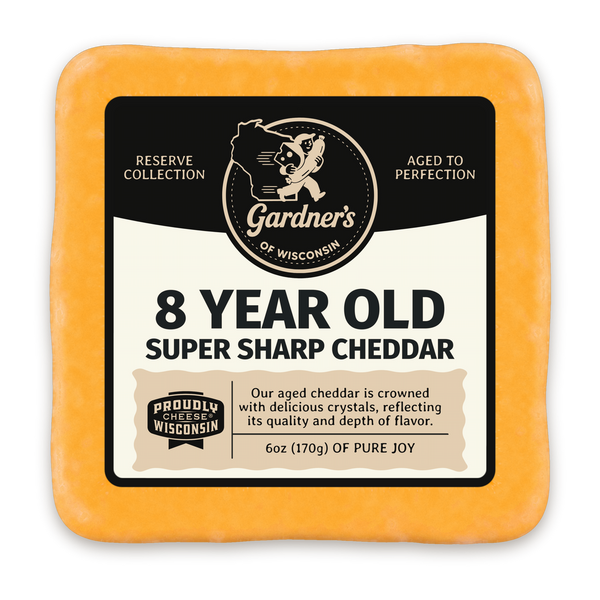
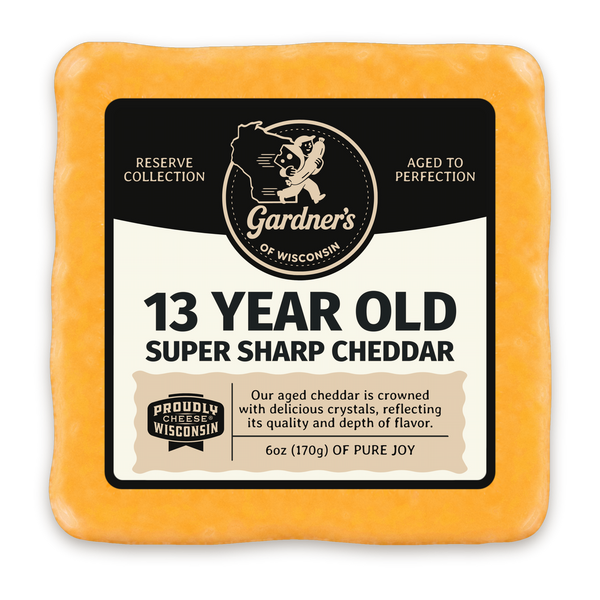
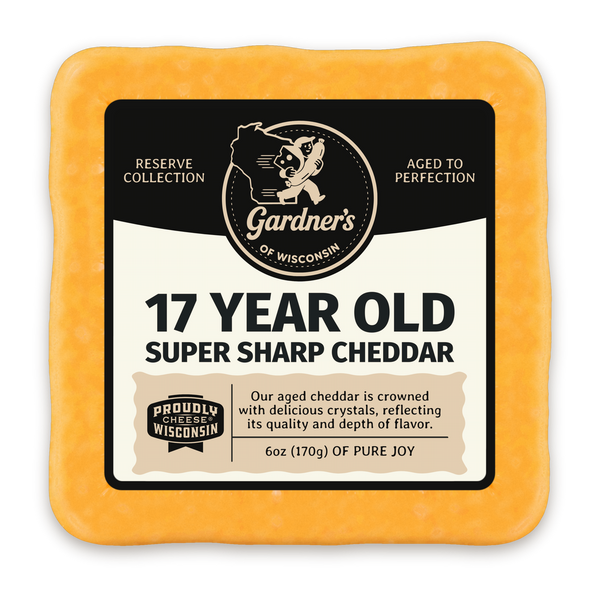
The Gardner's lineup covers most of that calendar, from aged cheddar cheese at 3 to 4 years (mild, smooth, subtly sharp) up through the 8-Year-Old Super-Sharp Cheddar, 13-Year-Old Super-Sharp Cheddar, 17-Year-Old Super-Sharp Cheddar & a limited 20-Year-Old Super-Sharp Cheddar. Same four ingredients, same ten steps. The only variable is the calendar.
-
The starter
8-Year-Old Super-Sharp Cheddar
Eight years past step 10. Crystals & a clean crumble.
Shop the 8-Year -
The crystal one
13-Year-Old Super-Sharp Cheddar
Thirteen years. Crunchy calcium lactate in every bite.
Shop the 13-Year -
The deep end
17-Year-Old Super-Sharp Cheddar
Seventeen years of aging. Sharp enough to argue with.
Shop the 17-Year
Not sure which age is yours? The art of aged cheddar guide walks through picking one.
How to Make Cheddar Cheese at Home (Honest Version)
How to make homemade cheddar cheese is a fair question, & the fair answer is: you can, it's a long day, & the hard part is the months after.
You'll need:
- 2 gallons of whole milk (not ultra-pasteurized; it won't set)
- A packet of mesophilic culture & rennet
- Cheese salt (non-iodized)
- A large stainless pot, a thermometer & a long knife
- Cheesecloth & a cheese mold with a follower
- A cheese press, or a stack of weights
- Cheese wax or a vacuum sealer
- A spot that holds 50 to 55°F: a wine fridge is the usual answer, & a cool basement works in winter (this is Wisconsin, so winter is most of the year)
The day: follow the 10 steps above. Plan on 6 to 8 hours from warming the milk to the block going into the press, most of it waiting & stirring. Two gallons gives you roughly a 2-pound wheel.
The wait: dry the wheel 2 to 3 days, turning it daily, until the surface is dry to the touch. Wax or seal it. Then age it at least 2 months before you cut it, turning it weekly. Six months is where it starts tasting like something. Homemade cheddar cheese rarely makes it past a year, partly because a home fridge isn't built for long aging & partly because you'll have eaten it.
The number one home mistake is ultra-pasteurized milk. The high heat wrecks the proteins & the curd never sets. Look for plain "pasteurized" on the carton, or buy from a local dairy.
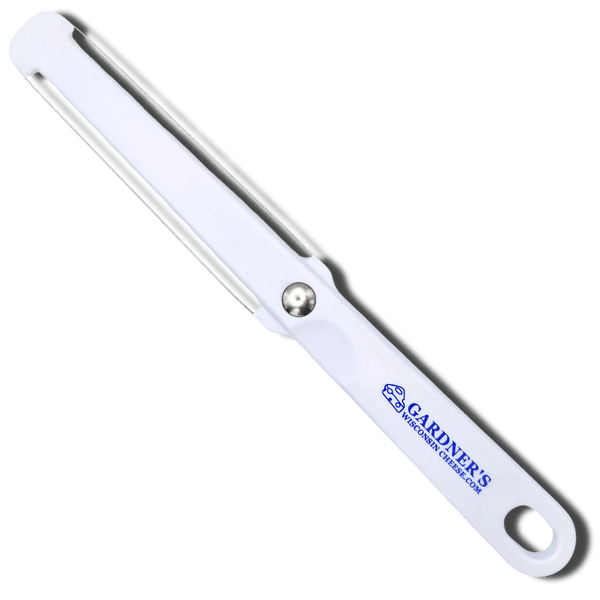
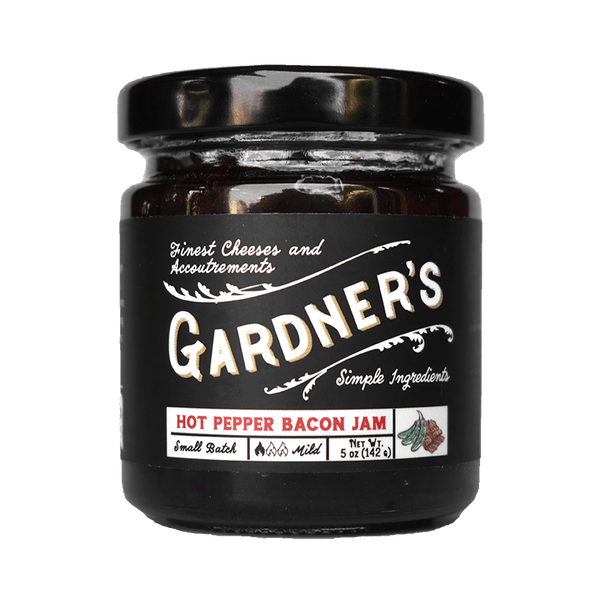
Or take the shortcut. The aging is the whole point, & with a long-aged cheddar the years are already in the block. Slice it thin with a Wire Cheese Slicer, add a smear of Hot Pepper Bacon Jam & you'll know what 13 years tastes like without waiting 13 years.
How Is Cheddar Cheese Made in a Factory vs a Farmhouse?
The steps are identical. The scale isn't. A plant works in vats that hold thousands of gallons, cheddars the curd on long tables or in automated towers & presses 40-pound blocks by the hundreds. A farmhouse makes a few wheels a day from its own herd & ages them with a rind. Pasteurized milk is standard at plants; raw milk is more common on farms & in traditional English cheddar.
Consistency is the plant's advantage: the same cheddar every week, which is exactly what you want before you commit a block to 20 years of aging. Character is the farmhouse's. Neither is better. Both are cheddar, made the same ten-step way.
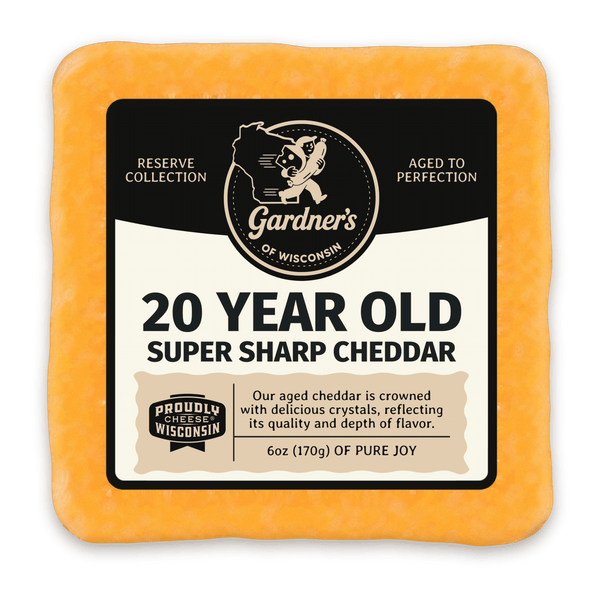
20-Year-Old Super-Sharp Cheddar
Two decades of aging in one limited-edition block. The far end of the cheddar calendar.
Shop the 20-Year CheddarFrequently Asked Questions
How long does it take to make cheddar cheese?
What is raw cheddar cheese?
Where does cheddar cheese originate from?
Why is cheddar cheese orange?
Can you make cheddar cheese without rennet?
What's the difference between cheese curds & cheddar?
Make It or Taste It
Making cheddar is a day of stirring & a calendar of waiting. If you've got the pot, the press & the patience, the ten steps above will get you there. Whey to go.
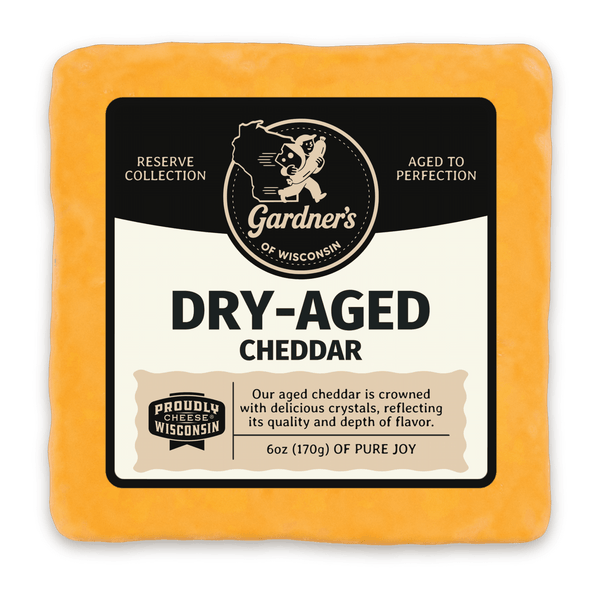
If you'd rather taste where that calendar leads, the Gardner's aged cheddars run from 3 to 20 years. Start with the Dry Aged Cheddar for everyday snacking, or go straight to the 13-Year-Old Super-Sharp Cheddar for the crystal crunch. Both ship cold-packed from central Wisconsin.
Skip the 20-Year Wait
Family-owned in central Wisconsin. Cheddars aged 3 to 20 years, shipped cold-packed to your door.
Shop Aged CheesesFree cold-pack shipping on orders $69+ · All 50 states