












Charcuterie Board Guide
How to Make a Charcuterie Board: The Wisconsin Cheesemaker's Guide
Three to five cheeses, two or three meats, something crunchy, something sweet & something briny. What to buy, how much you need per guest & how to lay it out, from a family that has made cheese & sausage in central Wisconsin for 40+ years.
3 to 5 CheesesDifferent ages, textures & flavors
2 to 3 MeatsA salami, a summer sausage, one wild card
2 to 3 ozCheese per guest on an appetizer board
30 to 45 MinOut of the fridge before guests arrive
The Short Answer
What Is a Charcuterie Board?
A charcuterie board is a serving board of cured meats & cheese, with crackers, spreads, fruit, nuts & something briny filling in the gaps. The word itself means cured meat. The cheese is what turns it into a party.
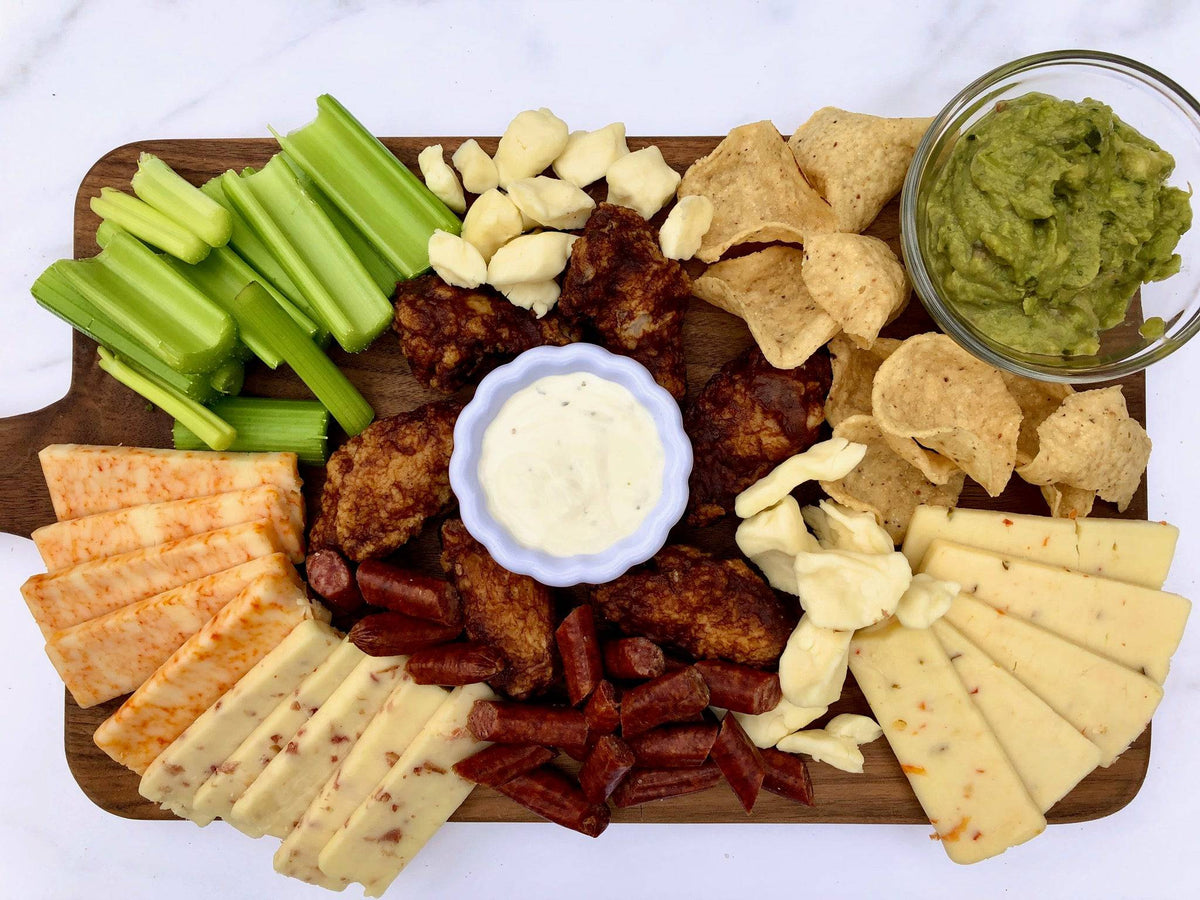
Making one comes down to five categories & a little contrast: a sharp cheese next to a mellow one, a smoky sausage next to a peppery salami, something crunchy, something sweet. Place the big pieces first, fill the gaps last, & let the cheese warm up before anyone digs in.
This page is the whole playbook: the step-by-step build, what to buy, how much per guest, how to slice & fold, & board ideas for every season. If you want a walkthrough from the people who make the cheese, our step-by-step board guide covers the same ground one board at a time.
Key Takeaways
- Every board needs five things: cheese, cured meat, crackers or bread, spreads, & fruit, nuts or pickles.
- Pick 3 to 5 cheeses that are clearly different: one sharp, one mellow, one flavored, one fresh.
- Plan 2 to 3 oz of cheese & 1 to 2 oz of meat per guest for an appetizer board. Double it if the board is dinner.
- Pull cheese out 30 to 45 minutes before serving. Add crackers last so they stay crisp.
- Short on time? The Charcuterie Essentials Bundle ships the cheese, meat & pairings in one cold-packed box.


Step by Step
How to Make a Charcuterie Board in 6 Steps
The order matters more than the ingredients. Anchor the board with the big pieces, then build toward the small ones.
1
Pick a board that fits the crowd
A 10 to 12 inch board covers 2 to 4 people, 14 to 18 inches handles 5 to 8, & for 9 or more go 18 to 24 inches or set out two boards. Wood, slate or marble all work. Our guide to how to assemble a stunning cheese board goes deeper on boards & materials.
2
Place the cheese first
Set down whole blocks & wedges before anything else. They're the visual anchors, & spacing them out gives every guest a way in. Slice part of each block & leave the rest whole so the board looks generous.
3
Add the bowls
Jams, drizzles, olives & nuts go in small bowls or ramekins next. They keep wet items off the crackers & give the board structure. Give every spread its own little spoon.
4
Fold & fan the meats
Fold salami into a rose or a river & fan summer sausage slices in an arc between the cheeses. Shaped meat looks intentional; a pile of slices looks like lunch. The three folds are below.
5
Fill every gap
Crackers, grapes, apple slices, nuts & pickles go into the open spaces. Stand crackers on edge & mound nuts in clusters so the board has height, not just coverage.
6
Let it breathe, then serve
Cold cheese hides its flavor. Give the board 30 to 45 minutes out of the fridge, add the crackers right before guests arrive, & set out a knife for each hard cheese.
Building ahead? Assemble the cheese & meat 2 to 3 hours early, cover & refrigerate, then pull it 30 to 45 minutes before serving. For more layouts that hold up on a buffet, browse these charcuterie board spreads.
What to Put on a Charcuterie Board


 The Matchmaker
The Formula: Cheese, Meat, Crunch, Sweet & Briny
Hit all five categories & the board feels complete. Skip one & guests notice, even if they can't say why.
01
The cheese
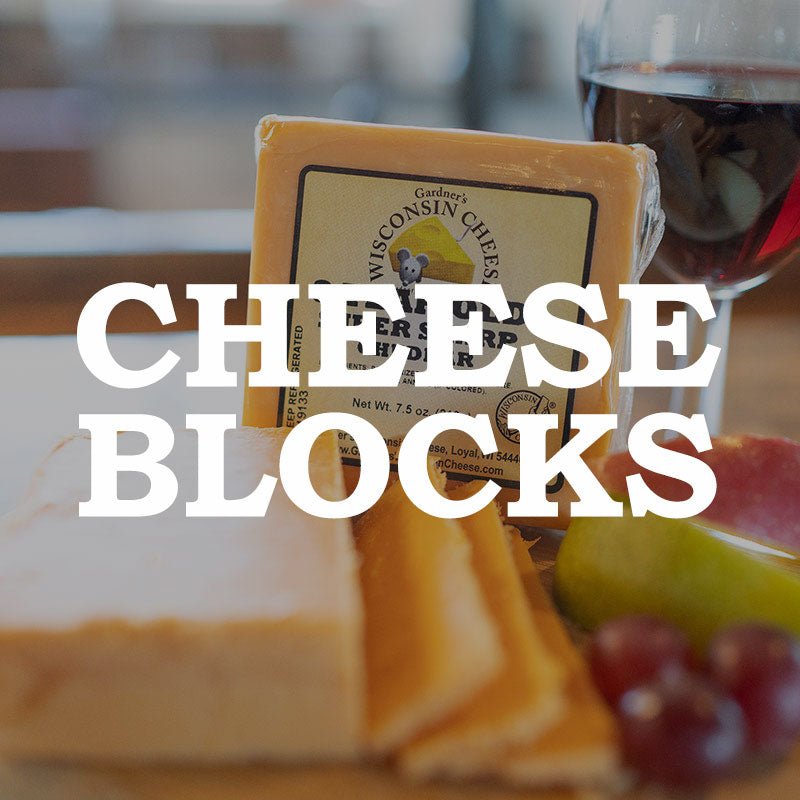
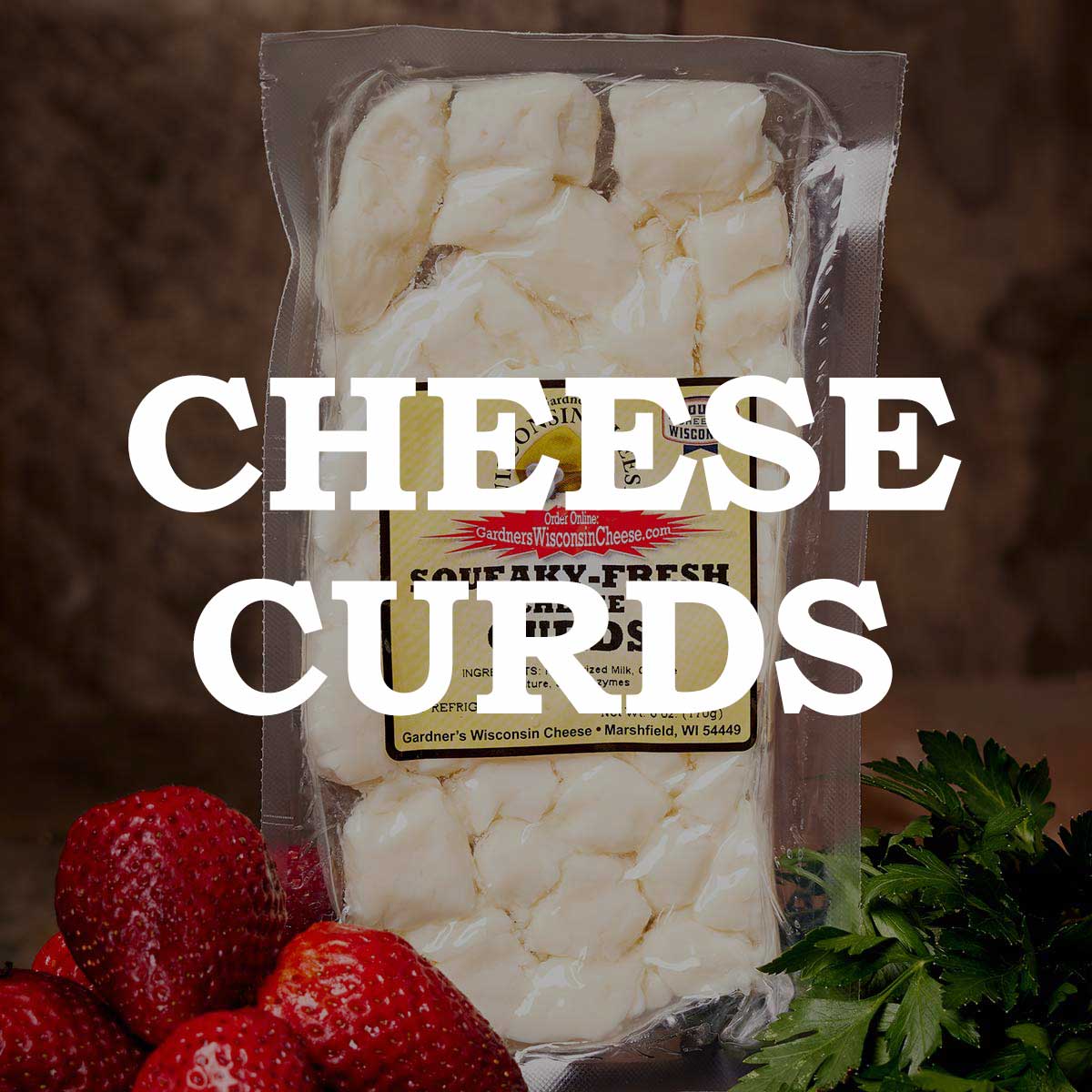
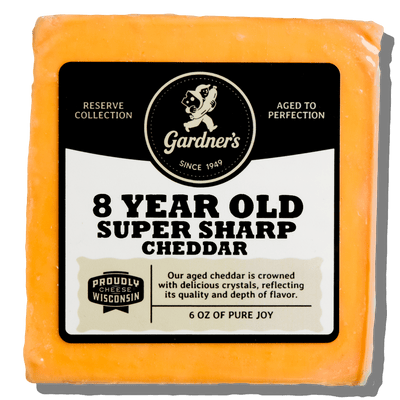
3 to 5 varietiesPick for contrast. One bold & sharp like 8-Year Super-Sharp Cheddar, one sweet & mellow like Gardner's Aged Gouda, one flavored like Smokey Bacon Cheddar, & one fresh like squeaky cheese curds.
The full lineup is in the best Wisconsin cheeses for a charcuterie board guide.
02
The meat
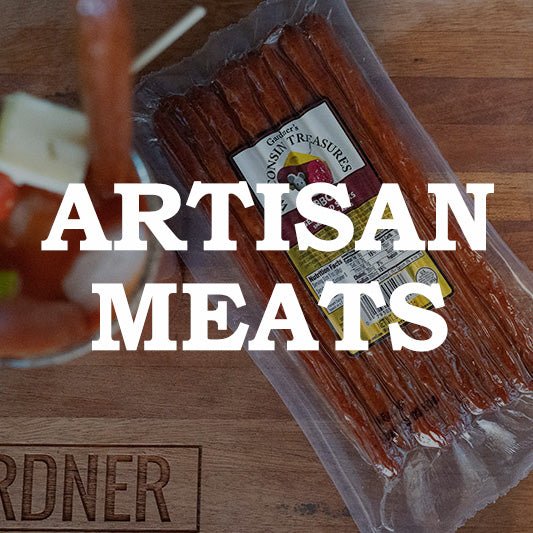
2 to 3 varietiesA dry salami like Classic Sliced Salami, a Garlic Summer Sausage for smoke, & one wild card. Snack sticks stand upright in a jar for height.
More on the best meats for charcuterie & why soppressata earns a spot.
03
The crunch
8 to 12 crackers per guestSturdy crackers for hard cheese, crostini or baguette for soft spreads, & breadsticks for height. Add a gluten-free cracker if anyone needs one. Running out of crackers is the most common board mistake.
04
The sweet
Spreads & drizzlesHot Pepper Bacon Jam on sharp cheddar, Gardner's Raspberry Honey Mustard with the sausage, & Hot Honey Drizzle within reach of everything. Plan 2 to 3 tablespoons per 4 to 6 guests.
05
The briny & fresh
Pick 3 or 4Olives, cornichons & pickles cut through rich cheese. Grapes, sliced apple, pear & figs add color. Nuts fill gaps. A cheese-heavy board needs more briny; a meat-heavy board needs more sweet.
06
The wild card
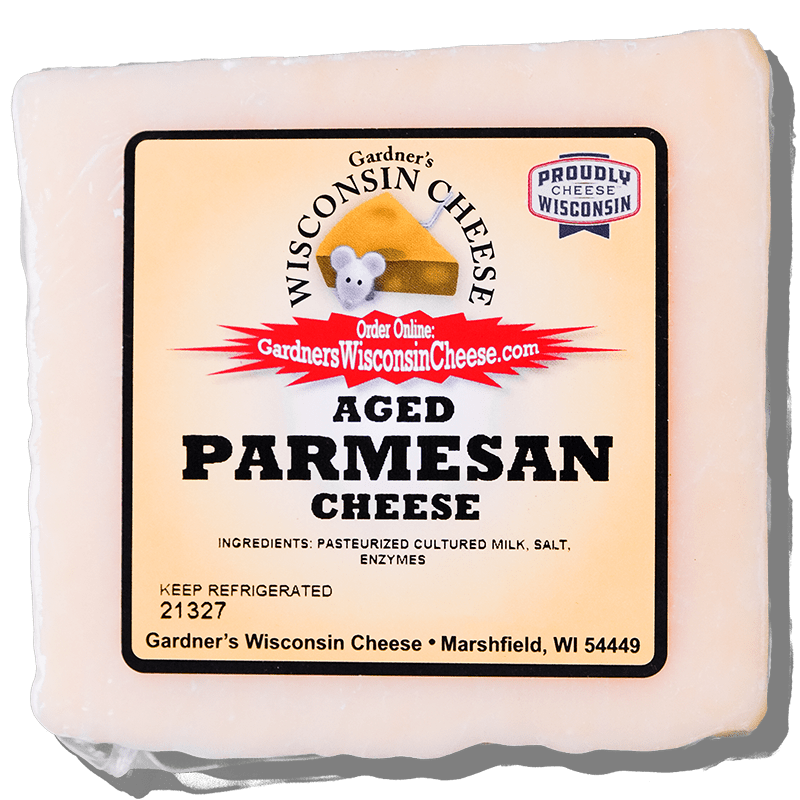
Optional, memorableShards of Aged Parmesan, a few slices of 17-Year Super-Sharp Cheddar, or Hot Sopressata Sliced Salami for heat. One showpiece per board is plenty.
Which Meat Goes With Which Cheese
Match intensity first, then contrast texture.
| Meat | Cheese match | Why it works |
|---|---|---|
| Classic Sliced Salami | cheese curds | Savory salt meets fresh, milky squeak |
| Garlic Summer Sausage | 8-Year Super-Sharp Cheddar | Smoke & garlic against sharp & crumbly |
| Hot Sopressata Sliced Salami | Gardner's Aged Gouda | Caramel sweetness cools the cayenne |
| Cracked Black Pepper Sliced Salami | Smokey Bacon Cheddar | Pepper & smoke for the bold corner |
| Teriyaki Snack Sticks | Mozzarella String Cheese | The grab-and-go corner of the board |
How Much Per Guest
Charcuterie Board Math: How Much to Buy
An appetizer board runs 2 to 3 oz of cheese & 1 to 2 oz of meat per guest. If the board is dinner, plan 4 to 5 oz of cheese & 2 to 3 oz of meat. Our blocks are 6 oz each, so the math lands in blocks below.
| Guests | Appetizer board | Board is dinner | Crackers | Board size |
|---|---|---|---|---|
| 4 | 8 to 12 oz cheese (2 blocks) 4 to 8 oz meat | 16 to 20 oz cheese (3 to 4 blocks) 8 to 12 oz meat | 32 to 48 | 10 to 12 in |
| 8 | 16 to 24 oz cheese (3 to 4 blocks) 8 to 16 oz meat | 32 to 40 oz cheese (6 to 7 blocks) 16 to 24 oz meat | 64 to 96 | 14 to 18 in |
| 12 | 24 to 36 oz cheese (4 to 6 blocks) 12 to 24 oz meat | 48 to 60 oz cheese (8 to 10 blocks) 24 to 36 oz meat | 96 to 144 | 18 to 24 in |
| 20 | 40 to 60 oz cheese (7 to 10 blocks) 20 to 40 oz meat | 80 to 100 oz cheese (14 to 17 blocks) 40 to 60 oz meat | 160 to 240 | Two boards |
Spreads & drizzles: 2 to 3 tablespoons per 4 to 6 guests. When in doubt, round up. Leftover cheese is tomorrow's snack, & our aged cheddars keep for a long time unopened in the fridge.
How long can a board sit out? With soft or fresh cheese on it, including curds, plan on 2 hours (1 hour above 90°F). An all-aged board of cheddar, gouda & parmesan holds up for 4 hours or more. The full rules are in how long can cheese sit out.
Slice It, Fold It, Lay It Out
How to Arrange a Charcuterie Board
Big pieces first, bowls second, meat in shapes, small things in the gaps. Then build up, not just out: stand crackers on edge, mound the nuts, let olives tumble.

01
The salami rose
The centerpieceFold slices in half over the rim of a small glass, overlapping as you go, two or three layers deep. Flip the glass onto the board & lift. One rose per board is plenty.
02
The river
Fills space fastFold slices into quarters & line them up in an S-curve across the board, between the cheeses. It fills open space & ties the board together in about a minute.
03
The fan
Easiest of the threeOverlap flat slices in a shingled arc. Best for summer sausage half-moons & the fastest way to make a plain slice look plated.
Slice Cheese So It Holds Together
Aged cheddar crumbles; that's what makes it great, & it's also why a knife fights it. A wire slicer cuts clean, even slices of crumbly or crystalline cheese without tearing. Our comparison of the cheese slicer vs knife vs wire cutter explains when to use which, & how to use a cheese slicer walks through the technique.
For thin, folded slices that drape over crackers, see the ultra thin cheese slicer guide. Choosing between a wire cheese cutter board & a handheld slicer comes down to how many people you're feeding, & these slicing tips for Wisconsin cheese cover every block we make.


Charcuterie Board Ideas Thanksgiving Charcuterie Board IdeasIncluding how to build a turkey boardRead
 Christmas Charcuterie Board IdeasRed, green & gone fastRead
 Seasonal Cheese Board Ideas: FallApples, pears, nuts & aged cheeseRead
 Halloween Charcuterie Board IdeasSpooky spreads for a crowdRead
 Summer Charcuterie Board IdeasFive builds that hold up in the heatRead
 Memorial Day AppetizersA cheese & sausage spread for the backyardRead
 Tailgate Food IdeasEats that travel & feed a crowdRead
 The Portable Tailgate Cheese BoardWhat actually holds up in a parking lotRead
Board Ideas for Every Season
Same formula, different season. Swap the fruit, the colors & one cheese, & the board fits the holiday.
Thanksgiving Charcuterie Board IdeasIncluding how to build a turkey boardReadChristmas Charcuterie Board IdeasRed, green & gone fastReadSeasonal Cheese Board Ideas: FallApples, pears, nuts & aged cheeseReadHalloween Charcuterie Board IdeasSpooky spreads for a crowdReadSummer Charcuterie Board IdeasFive builds that hold up in the heatReadMemorial Day AppetizersA cheese & sausage spread for the backyardReadTailgate Food IdeasEats that travel & feed a crowdReadThe Portable Tailgate Cheese BoardWhat actually holds up in a parking lotReadPairings
What to Serve With a Charcuterie Board
Salt loves sweet. A jam or drizzle bridges the meat & cheese, & a good cracker carries both. Put a sweet option within reach of every cheese on the board.
Drinks follow the same rule as the matchmaker table: match intensity. Big, sharp cheddar wants a bold red, a stout or a whiskey; mild cheese & curds want a lager or something crisp. Our wine and cheese pairing guide has the full chart, & cheese and crackers pairings covers which crackers suit which cheese.
For heat, hot honey & cheese pairings pairs our Hot Honey Drizzle with every cheese we make, & what is hot honey explains what it is & where else to use it. Building a board with greens on the side? The raspberry honey mustard vinaigrette uses Gardner's Raspberry Honey Mustard.


The Wisconsin Board Meat
Why Summer Sausage Belongs on Every Board
Softer & smokier than dry salami, summer sausage slices into half-moons that fan beautifully between cheeses. It's our top-selling meat, & it's shelf-stable until opened, so it travels to cabins & tailgates without a cooler.
New to it? Start with what is summer sausage, then the Wisconsin beer-hall history in our guide to Wisconsin summer sausage. Leftovers have a second life, too: our summer sausage recipes turn the end of the roll into dinner.
Shop Garlic Summer SausageSkip the Shopping


Charcuterie Board Delivery, Built for You
Every bundle ships cold-packed from central Wisconsin. Add crackers, fruit & a board, & you're done. Our guide to pre made charcuterie boards explains how they arrive & how to set them out, & this roundup of charcuterie board delivery options compares them side by side.
Want to build your own instead? The full charcuterie & accoutrements collection has every bundle, drizzle & tool in one place, & the artisan meats collection has every salami & snack stick.
Keep Reading The Gardner's Guide to Building a BoardRead
 Assemble a Stunning Cheese Board: Our Foolproof FormulaRead
 Timeless Ideas for a Charcuterie Board: How to Build the Perfect SpreadRead
 The Best Wisconsin Cheeses for a Charcuterie Board: Creating a Show-Stopping Cheese SpreadRead
 The Best Meats for a Charcuterie Board: What to Buy, Pair & FoldRead
 What Is Soppressata? The Bold Italian Salami Your Cheese Board Has Been MissingRead
 Cheese Slicers vs Cheese Knives vs Wire Cutters: The Wisconsin Take on Doing It RightRead
 How to Use a Cheese Slicer (Without Losing Your Mind...or Your Fingers)Read
 How to Use a Cheese Slicer (and Make Every Slice of Wisconsin Cheese Count)Read
 Ultra Thin Cheese Slicer: How to Get Paper-Thin Slices for Your Favorite Wisconsin CheesesRead
 Cheese Board Cutter vs. Wire Cheese Slicer: Which Is Right for Your Cheese Board?Read
 Wine and Cheese Pairing: A Cheesemaker's Guide to What Actually WorksRead
 Cheese & Crackers, Leveled Up: Pairings That Actually DeliverRead
 The Hot Honey & Cheese Cheat Sheet: Wisconsin's Favorite Sweet-Heat PairingsRead
 What Is Hot Honey? Plus 9 Ways to Drizzle It on EverythingRead
 Raspberry Honey Mustard VinaigretteRead
 What Is Summer Sausage? A Wisconsin Guide to the Ultimate Snack MeatRead
 What Is Summer Sausage? A Wisconsin Guide to the Beer-Hall ClassicRead
 Summer Sausage Recipes: Easy Meals, Snacks, and MoreRead
 A Guide to Receiving a Pre-Made Charcuterie BoardRead
 Top Charcuterie Board, Delivered: Delicious, Easy, And Surprisingly Squeaky OptionsRead
The Charcuterie Library
Every board post we've written, in one place. Scroll each row sideways.
Build & Stock the Board Start here
The Gardner's Guide to Building a BoardReadAssemble a Stunning Cheese Board: Our Foolproof FormulaReadTimeless Ideas for a Charcuterie Board: How to Build the Perfect SpreadReadThe Best Wisconsin Cheeses for a Charcuterie Board: Creating a Show-Stopping Cheese SpreadReadThe Best Meats for a Charcuterie Board: What to Buy, Pair & FoldReadWhat Is Soppressata? The Bold Italian Salami Your Cheese Board Has Been MissingReadSlice It Right Tools & technique
Cheese Slicers vs Cheese Knives vs Wire Cutters: The Wisconsin Take on Doing It RightReadHow to Use a Cheese Slicer (Without Losing Your Mind...or Your Fingers)ReadHow to Use a Cheese Slicer (and Make Every Slice of Wisconsin Cheese Count)ReadUltra Thin Cheese Slicer: How to Get Paper-Thin Slices for Your Favorite Wisconsin CheesesReadCheese Board Cutter vs. Wire Cheese Slicer: Which Is Right for Your Cheese Board?ReadPair It Drinks, crackers & drizzles
Wine and Cheese Pairing: A Cheesemaker's Guide to What Actually WorksReadCheese & Crackers, Leveled Up: Pairings That Actually DeliverReadThe Hot Honey & Cheese Cheat Sheet: Wisconsin's Favorite Sweet-Heat PairingsReadWhat Is Hot Honey? Plus 9 Ways to Drizzle It on EverythingReadRaspberry Honey Mustard VinaigretteReadSummer Sausage & Ready-Made Boards Meat & shortcuts
What Is Summer Sausage? A Wisconsin Guide to the Ultimate Snack MeatReadWhat Is Summer Sausage? A Wisconsin Guide to the Beer-Hall ClassicReadSummer Sausage Recipes: Easy Meals, Snacks, and MoreReadA Guide to Receiving a Pre-Made Charcuterie BoardReadTop Charcuterie Board, Delivered: Delicious, Easy, And Surprisingly Squeaky OptionsReadCharcuterie Board FAQ
Your Questions, Answered
The questions people ask most, answered by a family that makes the cheese & the sausage.
What is a charcuterie board?
A serving board of cured meats & cheese, filled out with crackers or bread, spreads, fruit, nuts & pickles. Charcuterie is French for cured meat; in the U.S. the word now covers any meat & cheese grazing board.
How do you make a charcuterie board?
Pick a board sized to your crowd, place the cheese first, add bowls for spreads & olives, fold & fan the meats, then fill every gap with crackers, fruit & nuts. Let the cheese sit out 30 to 45 minutes before serving.
How much cheese per person for a charcuterie board?
For an appetizer board, 2 to 3 oz of cheese & 1 to 2 oz of meat per person. If the board is the meal, plan 4 to 5 oz of cheese & 2 to 3 oz of meat. Round up; leftovers keep.
What cheese goes on a charcuterie board?
Three to five that are clearly different: a sharp aged cheddar, a mellow cheese like aged gouda, a flavored cheese, & something fresh like cheese curds. The formula section above breaks down each pick.
What meats go on a charcuterie board?
A dry salami, a summer sausage & one wild card, like a spicy sopressata or snack sticks. Two to three varieties is plenty for most boards.
What should I put on a charcuterie board besides meat & cheese?
Crackers or baguette, a jam or drizzle, briny items like olives & pickles, fresh or dried fruit, & nuts. Pick three or four extras that contrast with your cheeses.
Can I make a charcuterie board ahead of time?
Yes. Arrange the cheese & meat 2 to 3 hours ahead, cover & refrigerate, then pull it 30 to 45 minutes before serving. Add crackers & bread at the last minute so they stay crisp.
How long can a charcuterie board sit out?
About 2 hours if it has soft or fresh cheese, including curds, & 1 hour above 90°F. Hard aged cheeses like aged cheddar, gouda & parmesan hold up for 4 hours or more.
What size board do I need?
Roughly 10 to 12 inches for 2 to 4 people, 14 to 18 inches for 5 to 8, & 18 to 24 inches or two boards for 9 or more.
How do you fold salami for a charcuterie board?
Three folds cover it: the rose (fold slices over the rim of a glass, then flip it), the river (quarter-folded slices in an S-curve) & the fan (overlapping slices in an arc).
Keep Exploring
More Guides from Gardner's
Gifts for Cheese LoversGift boxes by person, budget & occasion, plus subscriptions.Read the guideSharp Cheddar Cheese GuideMild to 20-year: what changes as cheddar ages.Read the guideHow to Store CheeseWrapping, shelf life by type, freezing & mold rules.Read the guideTypes of CheeseCheese families, the cheeses worth knowing & a swap chart.Read the guide
Build It With Wisconsin Cheese & Sausage
Family-owned in central Wisconsin. Fourth-generation cheesemakers with 40+ years of cheese & sausage under one roof. Cheddars aged for years, curds made the morning they ship.
Free cold-pack shipping on orders $69+ to all 50 states